

Dr. K Sharada Reddy, Author
Senior Dentist & Full Mouth Rehabilitation Expert
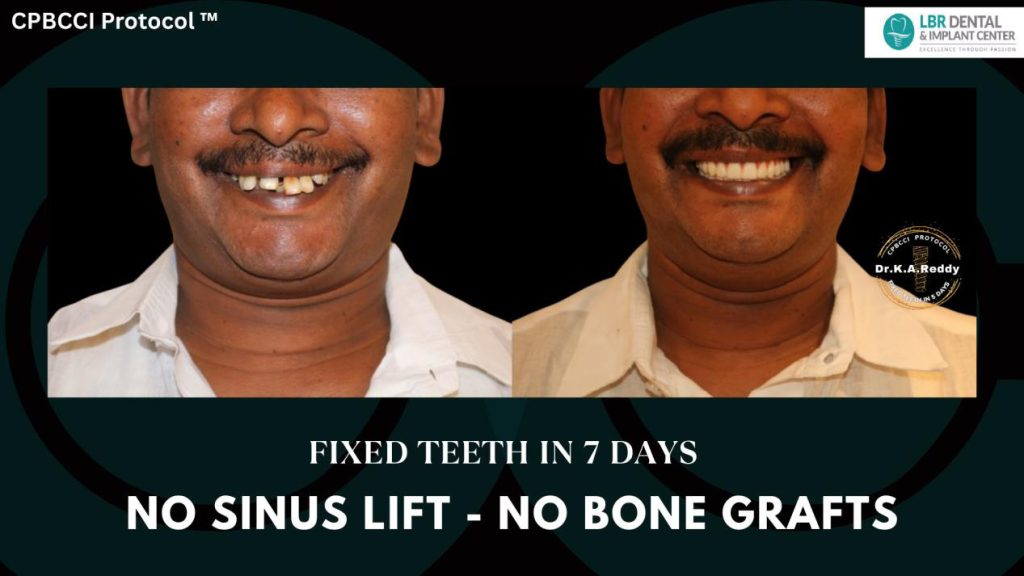
Patients suffering from complete tooth loss combined with severe jawbone resorption are often advised to undergo bone grafting before dental implants. However, bone grafting is not always predictable, comfortable, or successful. With advancements in modern implant dentistry, full mouth dental implants for patients with zero bone are now possible without bone grafting, using advanced techniques such as immediate loading dental implants, CPBCCI protocol, tilted implants, Zygomatic implants, and nerve bypass procedures.
“Zero bone” typically refers to extreme bone loss caused by long-term missing teeth, advanced gum disease, prolonged denture use, trauma, or failed implant treatments. In such cases, conventional dental implants, though known for their long-term stability and durability, may not be the best option when placed using traditional vertical techniques, as the available bone quantity is insufficient to achieve essential primary stability. This limitation often leads clinicians to recommend bone grafting. However, bone grafting comes with several disadvantages and uncertainties.
Disadvantages of Bone Grafting in Dental Implants
Bone grafting significantly increases the complexity, duration, and cost of dental implant treatment. When autogenous (same-donor) bone grafting is performed, bone must be harvested from another part of the patient’s body, such as the chin, jaw, or hip. This involves two surgical sites the donor site and the recipient site leading to increased expenditure, pain, swelling, prolonged healing time, and a higher risk of complications.
In cases where artificial or synthetic bone grafts are used, the body may or may not accept the graft material. There is a risk of graft rejection, infection, graft resorption, and delayed healing, which can ultimately lead to implant failure. Additionally, bone grafting requires long waiting periods often 9 to 18 months before implants can be placed, and even then, the success rate in severely resorbed jaws remains unpredictable.
Because of these limitations, modern implantology now strongly favors graft-less implant solutions, especially for full mouth dental implants in no-bone cases.
CPBCCI Protocol: A Superior AlternativetoBone Grafting
The CPBCCI (Crestal Polished Bicortical Conventional Implant) protocol offers
a predictable, graft-less implant solution for patients with severe bone loss or zero bone conditions. In this protocol, FDA-approved conventional implants are strategically placed using the tilted implant technique, allowing engagement of strong cortical bone, which is present in everyone regardless of bone condition, rather than relying on weak spongy bone.
By placing implants at an angle into high-quality cortical bone, the implant-to-bone contact ratio is significantly increased, resulting in superior primary stability. This enhanced stability enables immediate loading of fixed teeth, even in compromised bone situations. The polished implant surface further reduces bacterial adhesion and lowers the risk of peri-implant infections, ensuring long-term implant success.
Tilted Implants: Maximizing Available Bone for Stability
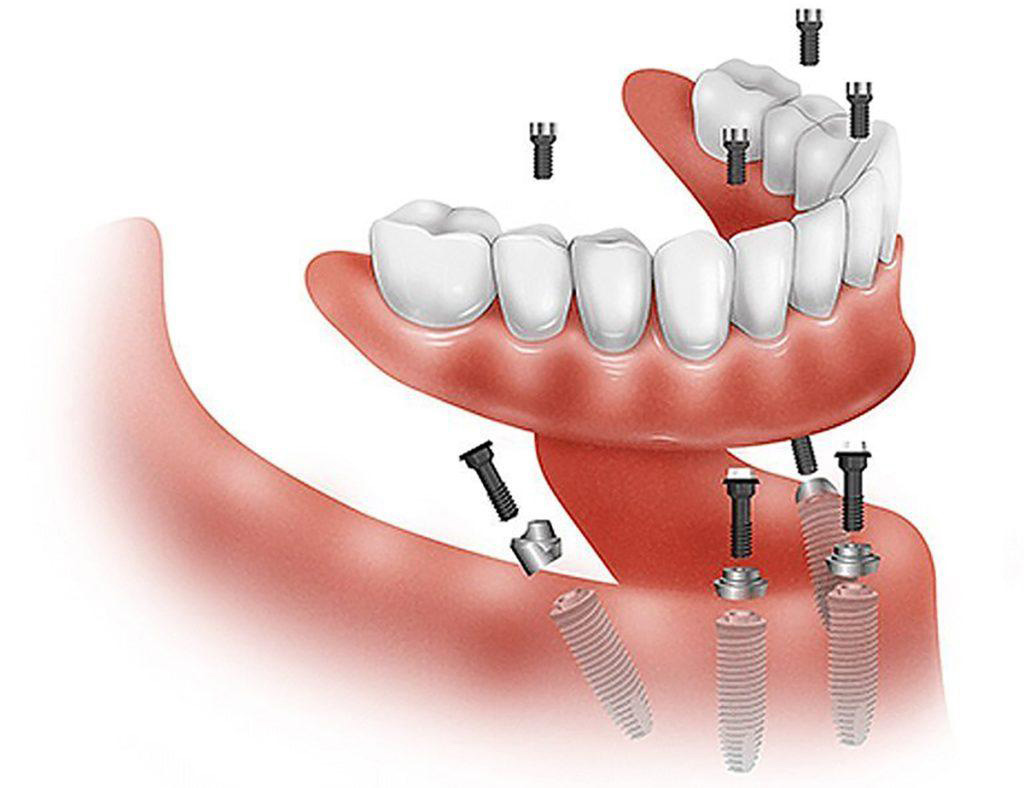
The tilted implant technique plays a crucial role in full mouth rehabilitationfor low-bone patients. Instead of placing implants vertically in resorbed bone, implants are tilted and anchored into dense cortical bone regions. This approach avoids vital anatomical structures such as the maxillary sinus and inferior alveolar nerve, eliminates the need for bone grafting, and allows the use of longer implants suitable for that specific bone condition for better anchorage.
By utilizing the best available bone, tilted implants increase stability, evenly distribute biting forces, and significantly improve the success rate of full mouth dental implants.
Zygomatic Implants for Absolutely No Bone in the Upper Jaw
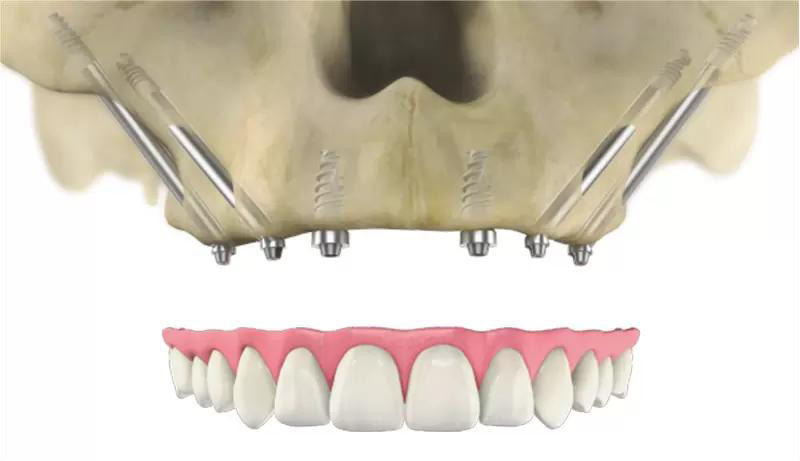
In patients with absolutely no bone in the upper jaw, Zygomatic implants provide a revolutionary and life-changing solution. These implants are anchored into the Zygomatic (cheek) bone, which is dense, strong, and does not undergo resorption.
Zygomatic implants, placed non-invasively under local anesthesia, eliminate the need for bone grafting, sinus lifts, and hospitalization. When combined with Pterygoid implants placed posteriorly in the pterygoid bone (a part of the skull), they provide maximum stability and support immediate loading of fixed teeth. This allows patients to walk out with a functional smile and permanent teeth, even when they were previously told that implants were impossible.
Nerve Bypass Technique in the Lower Jaw
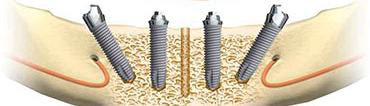
For patients with severe bone loss in the lower jaw, the nerve bypass technique enables safe implant placement without disturbing the inferior alveolar nerve. Instead of nerve repositioning which can cause numbness and long-term complications the implant is strategically placed by bypassing the nerve and engaging available cortical bone.
This advanced technique ensures stable implant placement, avoids nerve injury, and supports immediate loading dental implants, even in highly resorbed mandibular jaws.
Immediate Loading: Fixed Teeth With in a Week
By combining the CPBCCI protocol, tilted implants, Zygomatic implants, pterygoid implants, and nerve bypass techniques, immediate loading full mouth dental implants become a reality. Patients receive fixed, non-removable teeth with in 7 to 8 days, eliminating long healing phases and the need for removable dentures.
Why Graft-Less Full Mouth Implants Are Better Than Bone Grafting
Graft-less full mouth dental implants offer faster treatment, fewer surgeries, minimal discomfort, predictable outcomes, and long-term stability. Unlike bone grafting which carries higher failure risks in low-bone cases CPBCCI-based immediate loading implants deliver reliable and durable results, even in the most complex implant scenarios.
Why LBR Dental & Implant Center Is Trusted for Zero Bone Cases
LBR Dental & Implant Center is highly recognized for managing complex and advanced dental implant cases, including patients with absolutely no bone. With expertise in CPBCCI protocol, tilted implant placement, Zygomatic implants, pterygoid implants, nerve bypass techniques, and immediate loading implants, the center has successfully rehabilitated patients who were denied treatment elsewhere.
Their ability to deliver fixed teeth with in a week under local anesthesia makes LBR Dental & Implant Center a leading destination for full mouth dental implants in India.
Conclusion
Severe bone loss or “zero bone” is no longer a limitation for dental implant treatment. With advanced graft-less techniques such as the CPBCCI protocol, tilted implants, zygomatic implants, pterygoid implants, and nerve bypass procedures, full mouth dental implants without bone grafting are now safe, predictable, and highly successful. Patients can regain fixed teeth, confident smiles, and normal chewing function within days, not years. Choosing an experienced center like LBR Dental &Implant Center ensures world-class care, even in the most challenging implant cases.
Frequently Asked Questions
Bone grafting involves additional surgeries, long healing periods, unpredictable graft acceptance, and higher chances of failure, especially in severely resorbed jaws.
The CPBCCI protocol avoids bone grafting, utilizes strong cortical bone, increases implant stability through tilted placement, and allows immediate loading of fixed teeth.
Yes. Tilted dental implants have excellent long-term success rates and significantly improve implant-to-bone contact in low-bone cases
Zygomatic implants are used when there is absolutely no bone in the upper jaw. They anchor into the cheekbone and allow immediate fixed teeth without grafting.
No. When performed by experienced implantologists, nerve bypass is a safe and predictable technique that avoids nerve injury and supports stable implant placement.
Most patients receive fixed teeth within a week using immediate loading implant protocols
QUICK ENQUIRY
Success Stories

International Patients
Our Clinic

Share this post
Author
Dr. K Sharada Reddy
Senior Dentist & Full Mouth Rehabilitation Expert