

Dr. K Sharada Reddy, Author
Senior Dentist & Full Mouth Rehabilitation Expert
Full Mouth Dental Implants: Complete Guide to Getting Fixed Teeth in India
If you have lost most or all of your teeth, you may have already experienced the limitations of dentures,difficulty chewing, movement while eating, discomfort, changes in speech, or simply the worry that your teeth may come loose at the wrong time.
Full mouth dental implants offer another option, replacing missing teeth with a fixed implant supported solution designed to restore chewing function, stability and the appearance of your smile.
At LBR Dental & Implant Center in Hyderabad, full-mouth implant treatment is planned around the patient’s anatomy, bone availability, bite, aesthetic requirements and long-term prosthetic needs.
This guide explains what full-mouth dental implants are, who may benefit from them, how treatment works, what happens when there is insufficient bone, and what patients from India and overseas should consider before choosing an implant clinic.
What Are Full Mouth Dental Implants?
Full mouth dental implants are a treatment approach used to replace total missing or failing teeth with implant supported replacement teeth.
Rather than placing an individual implant for every missing tooth, several strategically positioned dental implants can support a complete upper or lower arch of fixed replacement teeth.Depending on the patient’s individual condition, bone availability, and treatment requirements, the recommended treatment may include:
1. All-on-6 Dental Implants
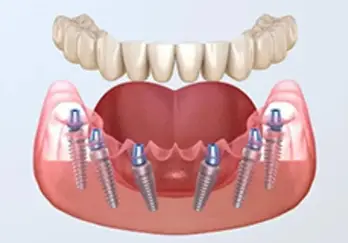
Six strategically positioned implants are placed in each arch. In the upper jaw, pterygoid implants will be used to achieve strong posterior support and eliminate the need for prosthetic cantilevers. This provides improved load distribution and can support immediate loading, allowing fixed teeth to be delivered in as little as 7 days, when clinically suitable.
2. All-on-4 Dental Implants
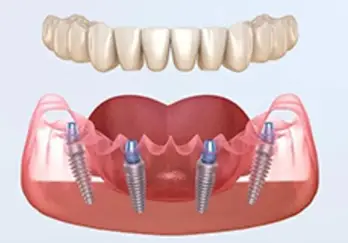
As the name suggests, four implants are placed in each arch, typically with the implants concentrated in the anterior and premolar regions.
Because of the reduced number of implants and limited posterior support, the final prosthesis may require a cantilevered design. Depending on bone quality, primary stability, and other clinical factors, immediate loading may not always be suitable.
The objective is not simply to replace missing teeth. A properly planned full mouth rehabilitation should consider chewing efficiency, bite, facial aesthetics, speech, hygiene and long-term maintenance.
Who Is a Candidate for Full Mouth Dental Implants?
Full-mouth implant treatment may be considered for people who have: Lost most or all of their natural teeth
Multiple loose or failing teeth Advanced periodontal disease
Severely damaged teeth that cannot be predictably restored Long-standing tooth loss
Uncomfortable or unstable dentures Difficulty chewing with removable dentures
A combination of missing and severely compromised teeth
Age does not determine whether someone can receive dental implants.The important factors are the condition of the jaws, gums, remaining teeth, general health, bite, bone availability and ability to maintain good oral hygiene.
Full Mouth Dental Implants vs Dentures
One of the most common questions patients ask is:
“Should I continue with dentures or consider dental implants?”
Traditional dentures are removable appliances that rest on the gums and do nothing to arrest the bone loss that usually follows tooth extraction.
Implants act as tooth roots and help in distributing the stimulus from the chewing forces to the surrounding bone there by maintaining healthy bone and also provide provide support and stability.
Dentures
Dentures can be an effective and economical solution for many patients. However, many people experience:
Movement while eating Gaging sensation
Difficulty chewing certain foods Sore areas
Reduced confidence Difficulty speaking
Problems with lower denture stability
Implant-Supported Fixed Teeth
Implant-supported teeth offer
Greater stability
Improved chewing function
A fixed rather than removable solution Improved confidence when eating and speaking
A more stable foundation for a full-arch prosthesis
The right choice depends on the patient’s individual circumstances.
What Is All-on-6 Dental Implant Treatment?
All-on-6 dental implants are a full-arch treatment concept in which a complete arch of replacement teeth is supported by six strategically positioned implants.Instead of replacing every missing tooth separately, the implants are planned to support a complete fixed arch.
All-on-6 is an ideal treatment solution to replace complete set of teeth in each of the jaws, without any cantilevers.
Potential advantages can include:
Fixed replacement teeth Efficient use of available bone
Distribution of chewing forces across multiple implants
Full-arch rehabilitation with fewer implants than one-for-one replacement Potential for immediate permanent fixed teeth in appropriately selected cases
All-on-6 vs All-on-4: Which Is Better?
Patients often search for All-on-6 vs All-on-4 when researching full-mouth implants.
Both are established full-arch treatment concepts,with an edge for “All on 6” over “All on 4” as “All on 6” provides better stability, good distribution of chewing forces on to the implants,immediate loading of permanent teeth and also avoids cantilevers in the prosthesis.
Can You Get Dental Implants Without Sufficient jaw bone
Patients with severely resorbed jaws or insufficient bone for conventional dental implants are traditionally treated with bone grafting and or sinus lift procedures, followed by a healing period of several months before implants can be placed. After implant placement, another healing period of approximately 3–4 months may be required before the final teeth can be fixed.
However, modern implantology has advanced significantly, and several alternative implant strategies can help avoid extensive bone-grafting procedures in appropriately selected patients. Techniques such as tilted implants, the CPBCCI Protocol™, pterygoid implants, and zygomatic implants can utilize the patient’s existing cortical and anatomical bone to achieve strong implant stability even in cases with severely resorbed jaws.
Depending on the patient’s anatomy and clinical requirements, these techniques may allow immediate loading and fixed teeth in under a week, without the need for conventional bone grafting or sinus lifting.
At LBR Dental & Implant Center, every treatment plan begins with a detailed evaluation of the patient’s three-dimensional jaw anatomy using CBCT imaging. We carefully identify areas of available bone and determine the most predictable implant positions to achieve optimal primary stability and long-term support.
Based on the individual anatomy, an appropriate combination of implant techniques may allow patients with severe bone loss even those told they have “no bone” for implants to receive fixed teeth without conventional bone grafting.
Zygomatic Implants for Severe Bone Loss
Zygomatic implants are an advanced implant treatment option for patients with severe upper-jaw bone loss.
Instead of relying primarily on severely resorbed areas of the upper jaw, zygomatic implants obtain their anchorage from the zygomatic bone, or cheekbone.
This can make zygomatic implant treatment an option for some patients who have insufficient maxillary bone for conventional implants.
Zygomatic implants may be considered in situations involving: Severe upper-jaw bone resorption
Extensive posterior maxillary bone loss Previous unsuccessful grafting
Patients seeking alternatives to extensive bone reconstruction
The procedure requires detailed CBCT evaluation and advanced surgical planning.
What Are Quad Zygoma Implants?
Quad zygoma implants generally refers to a treatment approach using four zygomatic implants to support a severely resorbed upper jaw or absolutely no bone cases, where placement of atleast one regular sized implant is not possible in the upper jaw bone .The approach is particularly relevant when conventional implant placement in the upper jaw is severely compromised.
Quad zygoma treatment is an advanced procedure and is not necessary for every patient with bone loss.
What Are Pterygoid Implants?
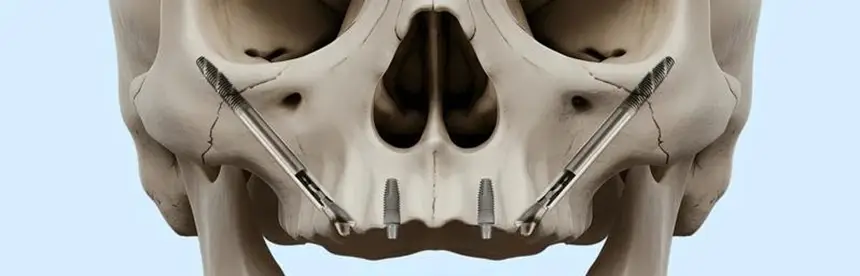
Pterygoid implants are placed in the posterior upper-jaw region and obtain anchorage from the pterygoid region,which is a part of the head bone.
They can be useful in all the patients with limited posterior maxillary bone and are planning for a full upper arch rehabilitation or replacement of upper molars.
One potential advantage of a pterygoid approach is that it will provide an alternative to certain posterior bone augmentation procedures and also avoid cantilevers in the prosthesis as the pterygoid implant will be present behind the upper third molar.
Zygomatic v/s Pterygoid Implants
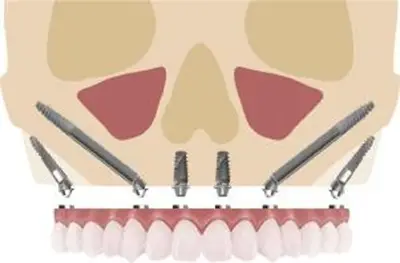
These are not simply two competing implant types. They address different anatomical situations.
Zygomatic implants use the Zygomatic bone for anchorage and are primarily associated with severe maxillary bone loss.
Pterygoid implants obtain anchorage in the posterior maxillary pterygoid region and are considered for upper molars or upper full arch teeth replacement.
In some complex cases, a combination of Zygomatic and pterygoid implants may be considered.
The choice depends entirely on the patient’s anatomy and treatment objectives.
Can You Get Fixed Teeth in 7 Days?
The phrase “fixed teeth in 7 days” has become increasingly popular among patients researching immediate implant treatment.
But what does it actually mean?
In patients with compromised jaw bone, bone augmentation procedures are suggested which are invasive, expensive and time consuming,where the treatment will extend upto several months.Using tilted implant technique,CPBCCI Protocol, implants can achieve sufficient primary stability to allow a fixed permanent prosthesis to be placed in less than a week.This is known as immediate loading.
What Is the CPBCCI Protocol™?
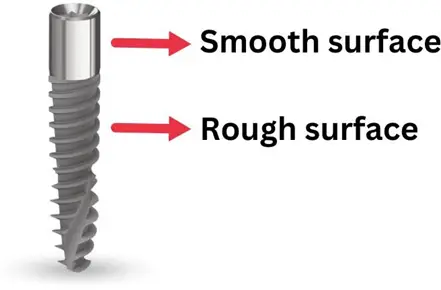
CPBCCI stands for Crestal Polished Bi-Cortical Conventional Implants.
The protocol is based on the concept of obtaining implant stability through strategic engagement of available cortical bone while using the universally accepted and FDA approved conventional two-piece implant systems.
One of the objectives is to enable implants for diabetic patients and also in smokers who are generally denied implants and also immediate loading in patients while reducing dependence on bone augmentation procedures.
As with any implant protocol, patient selection and detailed three-dimensional treatment planning are critical.
How Much Do Full Mouth Dental Implants Cost in India?
There is no single price for full-mouth dental implants.
The final cost depends on the complexity of the case and the type of treatment selected.
Factors can include:
Number of implants Implant brand
Conventional versus advanced implant procedures
Need for grafting or other procedures Final prosthetic material
Zirconia versus other restorative options
Laboratory costs
Surgical complexity
For international patients, LBR can evaluate available dental records and CBCT scans where appropriate and provide a treatment plan based on the individual case.
Full Mouth Dental Implants in Hyderabad
Hyderabad has become an important destination for advanced dental care in India.
For local patients, choosing a full-mouth implant clinic should involve more than comparing prices.
Look for:
Experienced implant clinicians Appropriate diagnostic facilities Advanced implant treatment capabilities Established implant systems
Prosthetic expertise Comprehensive treatment planning
Sterilization and infection-control standards Transparent treatment information Documented clinical experience
At LBR Dental & Implant Center, Hyderabad, implant dentistry and full-mouth rehabilitation are major areas of clinical focus.
Treatment options include:
Full Mouth Dental Implants | All-on-6 | Zygomatic Implants | Quad Zygoma | Pterygoid Implants | Immediate Loading | CPBCCI Protocol™
Full Mouth Dental Implants in India for International Patients
Patients from countries such as the USA, UK, Australia and Canada, travel to India for complex dental implant treatment.
However, choosing dental treatment abroad requires careful planning. Before travelling, international patients should consider:
The implantologist’s qualifications Experience with complex implant cases Implant systems used
Prosthetic laboratory capabilities Diagnostic technology Treatment timeline
Follow-up arrangements Total treatment cost
What is included in the treatment package Emergency and post-treatment support
Why Choose LBR Dental & Implant Center?
LBR Dental & Implant Center in Hyderabad is an implant-focused dental center providing treatment for routine as well as complex implant cases.
The clinic’s implant treatment options include:
Full Mouth Dental Implants All-on-6
Conventional dental implants Zygomatic implants
Quad zygoma Pterygoid implants
Immediate loading of teeth on implants Full Mouth Rehabilitation
Implant-supported zirconia restorations CPBCCI Protocol™
The emphasis is on individualized treatment planning, particularly for patients with extensive tooth loss or limited bone availability.
For international patients, case evaluation can be initiated using available dental records and imaging before travel whenever appropriate.
Frequently Asked Questions
Yes. Full-mouth dental implants are generally a better long-term option than conventional dentures for suitable patients.
Implants provide:
- Fixed, stable teeth without slipping or moving
- Better chewing efficiency and comfort
- A more natural look and feel
- Better preservation of jawbone compared with conventional dentures
- Improved confidence while eating and speaking
Dentures are less invasive and more affordable upfront, but they can move, require periodic adjustment, and may become loose as the jawbone resorbs.
Implant-supported fixed teeth offer a more stable and functional solution than conventional removable dentures.
Yes. Even with severe bone loss, dental implants may still be possible without conventional bone grafting or sinus lifts in carefully selected cases.
Using the CPBCCI Protocol™, treatment can utilize tilted implants, pterygoid implants and, in cases of extreme bone loss, zygomatic implants to anchor implants in available dense cortical bone. These approaches can provide the primary stability needed for immediate loading of fixed teeth, allowing patients to avoid lengthy grafting procedures and waiting periods.
Severe bone loss does not necessarily mean you need bone grafts or that fixed teeth are impossible. A CBCT-based evaluation is essential to determine the safest approach.
Yes, in many cases, dental implants can be placed without bone grafting. Depending on the amount and location of available bone, alternatives such as the CPBCCI Protocol™, tilted implants, pterygoid implants, or zygomatic implants may be considered.
These techniques can allow immediate loading of fixed teeth, potentially avoiding bone grafts and sinus lifts and significantly reducing treatment time.
A CBCT scan and detailed clinical evaluation are essential to determine the most suitable approach for each patient.
All-on-6 is one of the best suitable approach to full-arch implant rehabilitation. "Full mouth dental implants" is a broader term covering several treatment approaches.
Yes. In most of the cases, irrespective of the amount of bone loss, fixed teeth can be delivered within 7 days using the CPBCCI Protocol™. Depending on the available bone, pterygoid and zygomatic implants, along with strategically placed tilted implants, can provide the stability required for immediate loading of fixed teeth.
This approach can often avoid bone grafts and sinus lifts, allowing patients with significant bone loss to receive fixed teeth in a much shorter time.
The final treatment plan and suitability are determined through CBCT evaluation and clinical assessment.
Are zygomatic implants suitable for everyone with bone loss?
No. Zygomatic implants are not suitable for everyone with bone loss. They are primarily considered for patients with severe upper-jaw bone loss where conventional implants cannot be placed predictably.
At LBR Dental & Implant Center, cases are evaluated using CBCT to determine whether zygomatic implants, pterygoid implants, tilted implants, or the CPBCCI Protocol™ would be most appropriate. In suitable cases, these approaches can support immediate loading of fixed teeth without conventional bone grafting or sinus lifts.
How much do full mouth dental implants cost in India?
The cost of full-mouth dental implants in India varies depending on the number and type of implants, implant brand, and prosthetic teeth used, with complex cases such as zygomatic implants costing more.
At LBR Dental & Implant Center, the cost is determined after evaluating the patient’s CBCT and treatment requirements. All-on-6, CPBCCI Protocol™, pterygoid and zygomatic implants may be used depending on the available bone and clinical situation.
The final cost depends on your individual case and the type of fixed teeth you choose, such as hybrid acrylic or premium zirconia.
Can international patients complete implant treatment in one trip?
Yes. In many suitable cases, international patients can complete their full-mouth implant treatment in a single trip to India.
Using the CPBCCI Protocol™, along with pterygoid, zygomatic and tilted implants where required, treatment can often involve immediate loading of fixed teeth, with the complete process planned within approximately 10–12 days.
This approach can eliminate the need for bone grafting and sinus lifts in suitable cases and avoids the need for multiple trips over several months.
A CBCT evaluation and detailed treatment planning are essential before confirming the treatment and travel schedule.
Final Thoughts
Full mouth dental implants have transformed the way dentists approach extensive tooth loss.
For some patients, All-on-6 may provide a stable full-arch solution. For others with severe bone loss, advanced options such as zygomatic or pterygoid implants may need to be considered. In selected cases, immediate loading can allow patients to receive fixed provisional teeth soon after implant placement.
The most important point is that there is no single implant solution that is right for everyone.
The treatment should be based on the patient’s anatomy, bone availability, functional requirements, aesthetic goals and long-term prosthetic needs.
If you have been told that you have insufficient bone for conventional implants, have been struggling with dentures, or need replacement of most or all of your teeth, an advanced implant assessment can help determine what options may be available.
Explore Your Full Mouth Implant Options at LBR
LBR Dental & Implant Center, Hyderabad provides comprehensive implant solutions for local and international patients, including Full Mouth Dental Implants, All-on-6, Zygomatic Implants, Quad Zygoma, Pterygoid Implants and immediate-loading approaches for selected cases.
Book a Full Mouth Implant Consultation
QUICK ENQUIRY
Success Stories

International Patients
Our Clinic

Share this post
Author
Dr. K Sharada Reddy
Senior Dentist & Full Mouth Rehabilitation Expert