

Dr. K Sharada Reddy, Author
Senior Dentist & Full Mouth Rehabilitation Expert
How Many Implants Are Needed for a Full Mouth? All-on-4 vs All-on-6
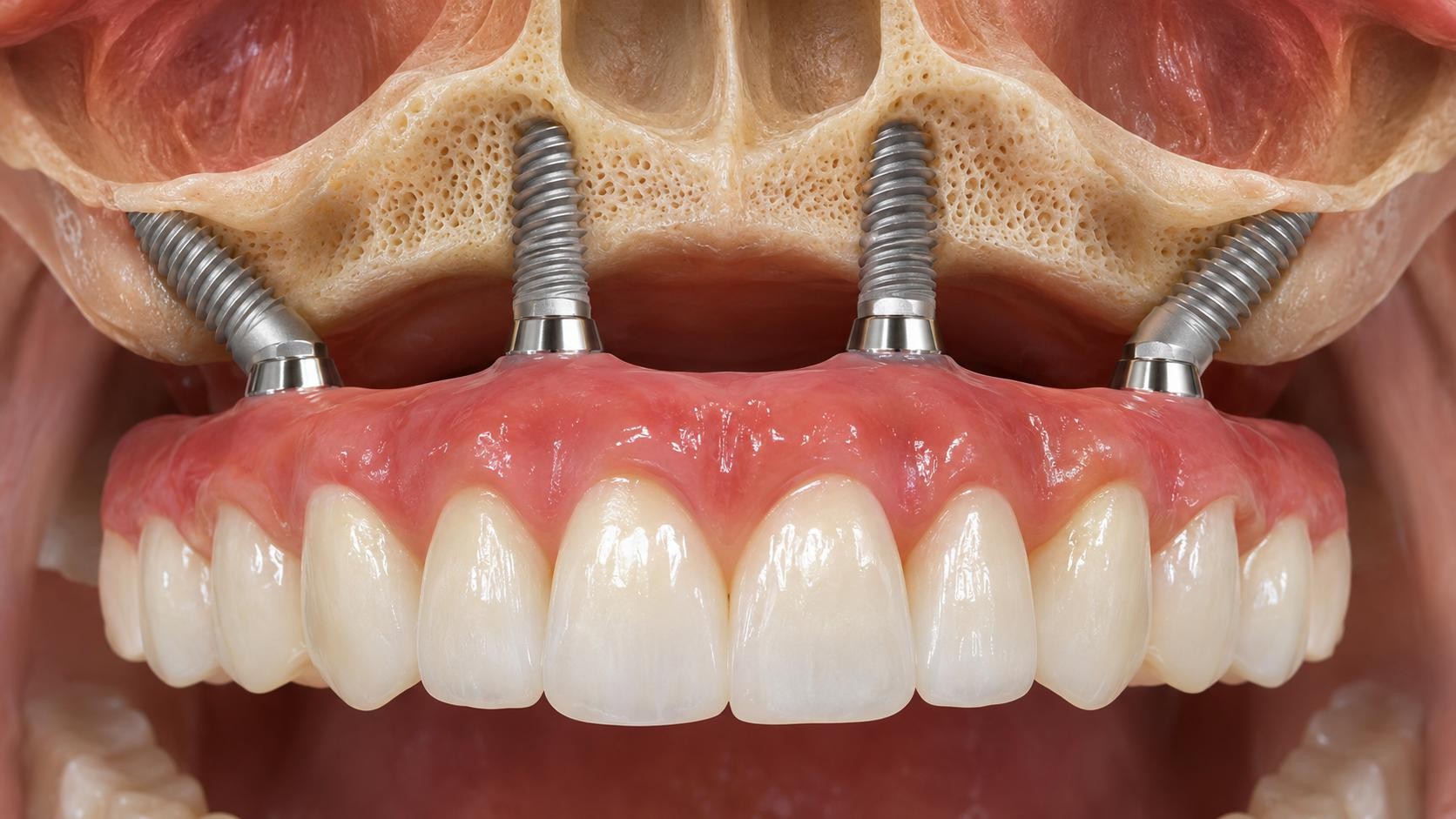
Losing most or all of your teeth can affect much more than your smile. It can make eating uncomfortable, change the way you speak, and affect your confidence in everyday life. For many international patients considering dental implants in India, one of the first questions is, how many implants for full mouth rehabilitation are actually needed? The answer depends on several factors, including the amount of available jawbone, bone quality, general oral health, bite forces, and the type of fixed teeth planned for your mouth. The good news is that replacing a full set of missing teeth does not usually require one dental implant for every tooth.
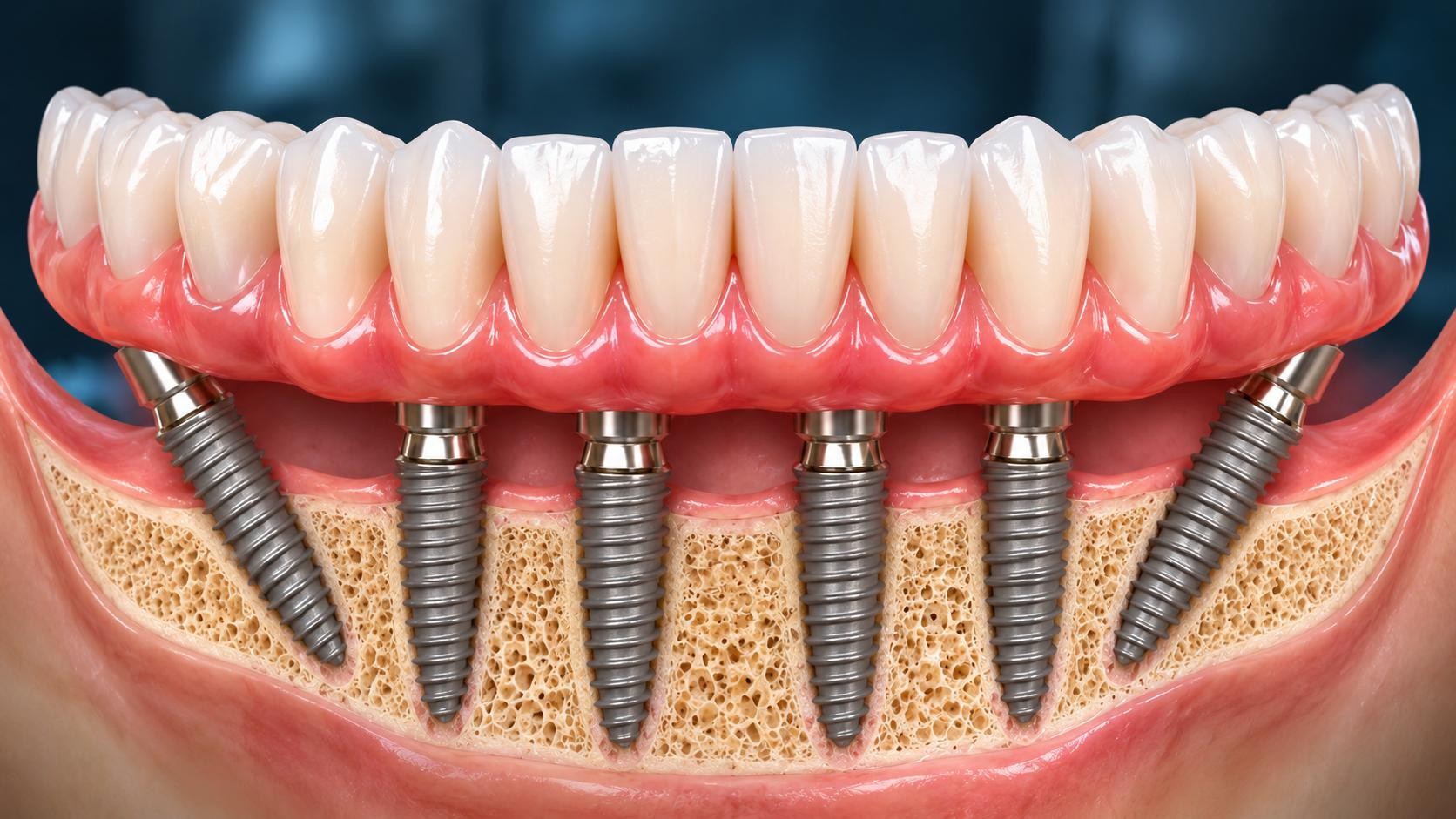
In many cases, four to six implants in each jaw can support a complete arch of fixed replacement teeth. Some patients may be suitable for All-on-4, while others may benefit from All-on-6 or a more advanced implant configuration. The right choice is not determined by the number of implants alone. Their position, distribution throughout the jaw, the quality of available bone, and the design of the final prosthesis are equally important. At LBR Dental & Implant Center located in Hyderabad, India,
Treatment planning focuses on selecting an implant solution suited to the patient’s individual needs, with the aim of restoring function, comfort, and confidence.
How Many Implants Are Needed for Each Jaw?
For patients who have lost all their teeth in the upper or lower jaw, four to six implants may be sufficient to support a complete arch in appropriately selected cases. With All-on-4, four strategically positioned implants support a full arch of replacement teeth. With All-on-6, six implants are used to provide additional support and more opportunities for distributing chewing forces across the jaw.
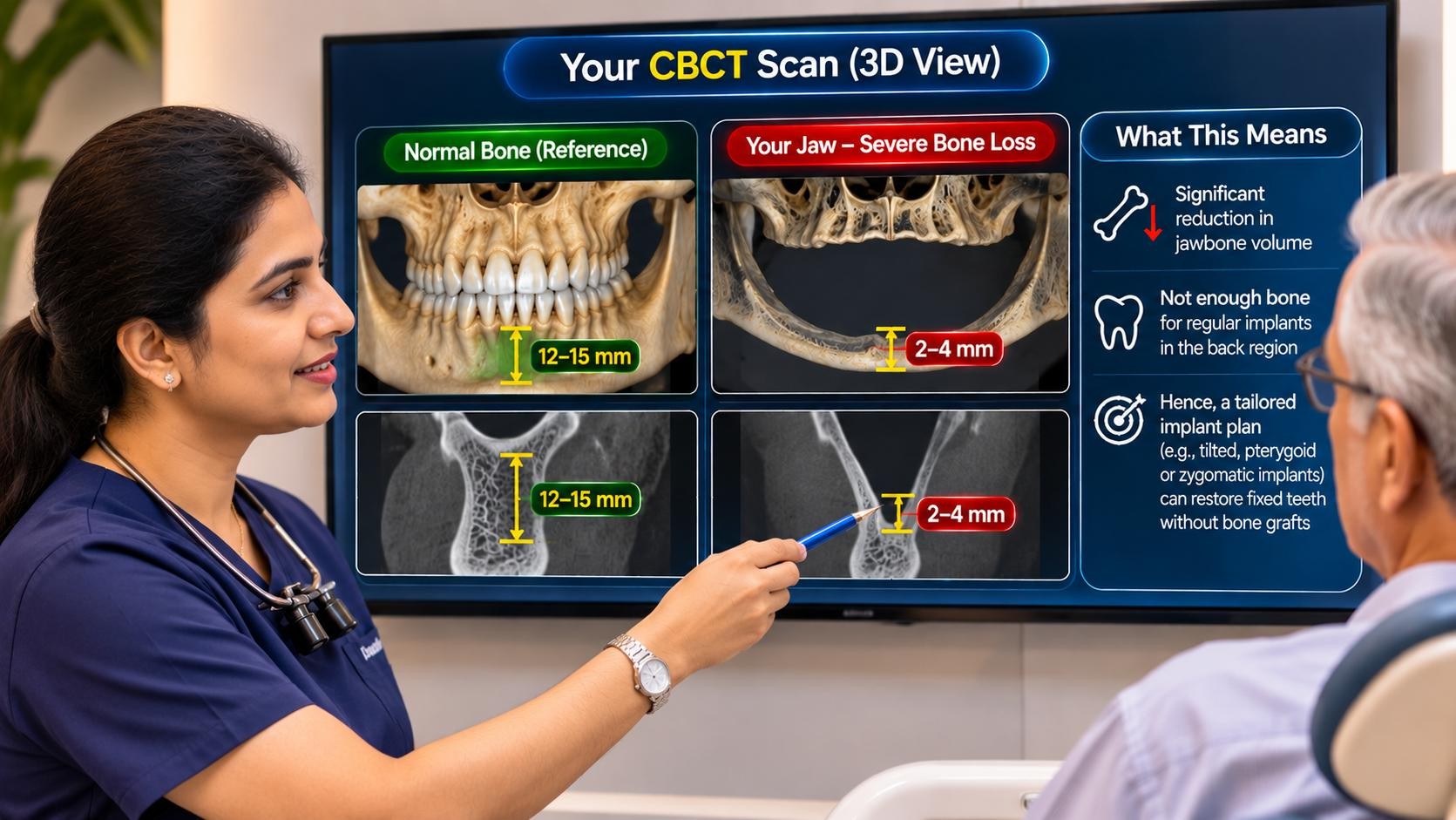
However, the number of implants for full mouth rehabilitation can vary according to the patient’s bone anatomy, the position of important anatomical structures, the condition of the gums, and the requirements of the final restoration. Patients with severe bone loss or complex previous dental treatment may need a different approach. A CBCT scan and a detailed clinical examination help determine which implant configuration is appropriate.
All-on-4 vs All-on-6: Which Is Better?
All-on-4 and All-on-6 are both established approaches to full arch implant rehabilitation, but they are not interchangeable in every clinical situation. All-on-4 uses four implants to support a complete arch and may be suitable for patients whose anatomy and restorative requirements permit this configuration. All-on-6 uses six implants and can provide additional support points, allowing the clinician greater flexibility when distributing implants along the arch.
At LBR Dental & Implant Center, the All-on-6 concept places particular emphasis on the distribution of implants throughout the jaw rather than concentrating support only in the anterior region, which usually happens with “All on 4” concept, where the 4
implants that are placed to replace the entire jaw of teeth are concentrated only in the anterior segment of the jaw. Where as in All on 6 concept, all the 6 implants are evenly spread out throughout the jaw, this distribution can help spread chewing and grinding forces across the arch and may reduce the load placed on individual implants and prosthetic components. Nevertheless, the outcome depends on implant positioning, bone quality, bite relationships, prosthetic design, and the patient’s individual circumstances.
Why Posterior Support Matters in All-on-6
One important consideration in full arch rehabilitation is the cantilever. A cantilever is the portion of a fixed dental prosthesis that extends beyond its supporting implants.
Excessive cantilever length can increase bending forces on implants, screws, and the prosthetic framework, particularly during chewing and grinding.
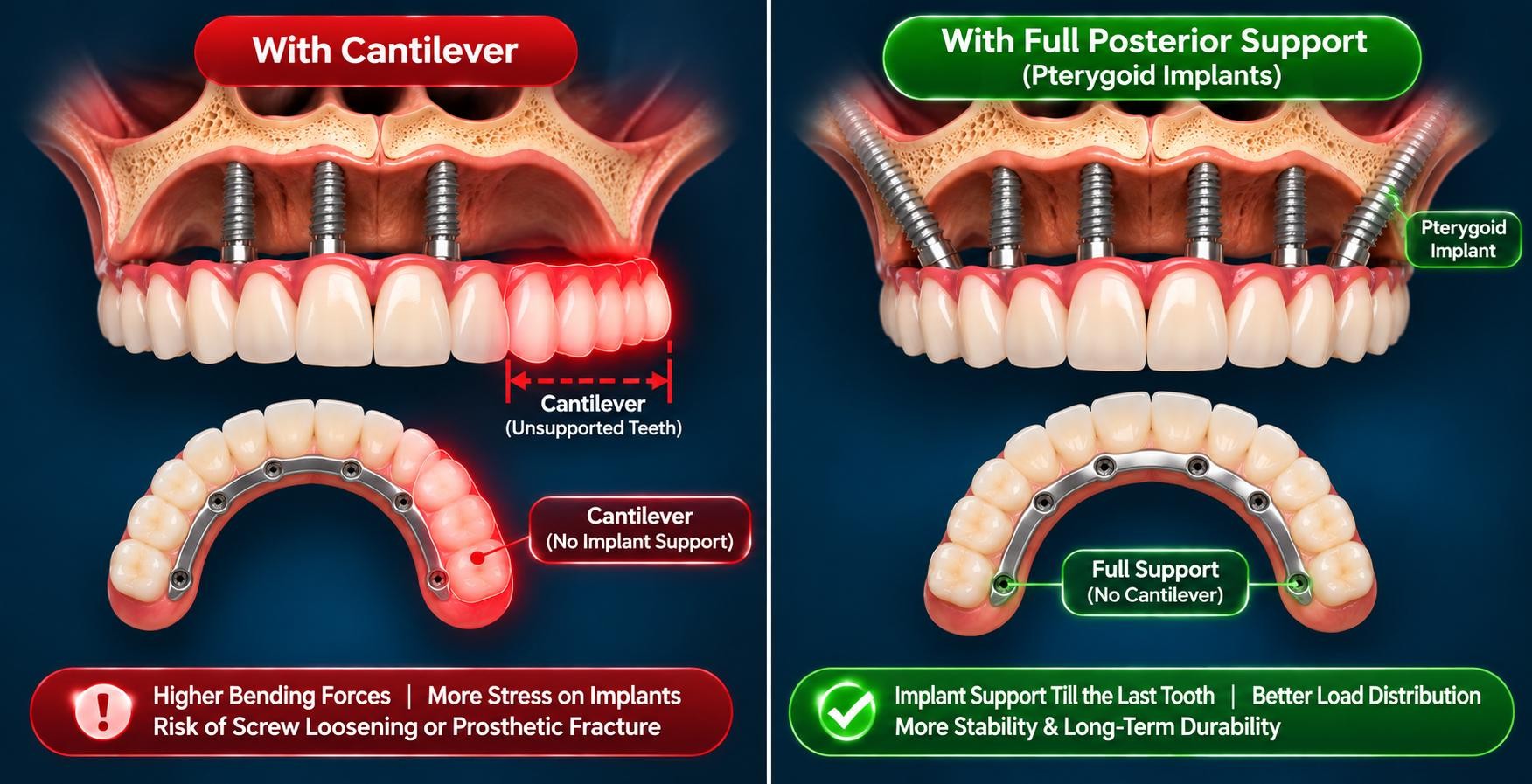
In upper-jaw teeth replacement cases, pterygoid implants can be incorporated into the treatment plan to provide support in the posterior-most region of the maxilla. These implants engage the pterygoid region and can help extend implant support towards the back of the arch. By improving posterior support, the prosthesis may be designed with out cantilevers, depending on the patient’s anatomy and the overall restorative plan.
This is especially relevant for patients with significant bone loss in the posterior upper jaw, where conventional implant placement may be challenging. Pterygoid implants help patients avoid additional grafting procedures, although this depends on the clinical situation. Their placement requires advanced surgical expertise, careful CBCT assessment, and appropriate prosthetic planning.
How Is the Lower Jaw Managed to Reduce Cantilevers?
The lower jaw presents different anatomical challenges, particularly because of the inferior alveolar nerve, which supplies sensation to the lower lip and chin. In some patients, conventional implant placement in the posterior mandible is restricted by the position of this nerve and the amount of available bone.
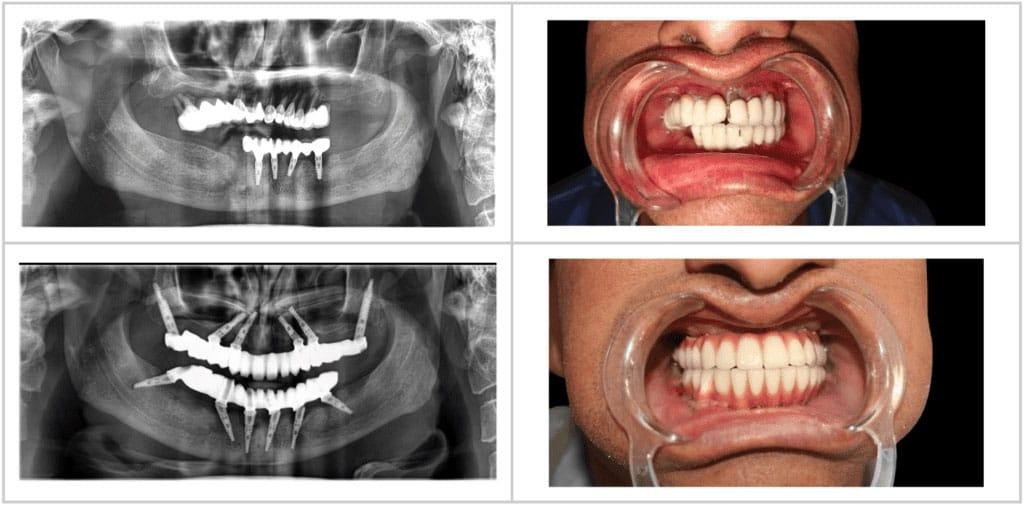
Carefully planned implant positioning usually by bypassing the nerve, including appropriate cortical bone engagement or a suitable trajectory that avoids the nerve canal, may allow clinicians to use the available bone while protecting important anatomical structures. In selected cases, this approach may help extend implant support towards the posterior part of the jaw and reduce the need for a cantilever.
How Does All-on-6 Help Distribute Chewing and Grinding Forces?
A full arch restoration must withstand repeated chewing forces every day. When implants are positioned appropriately from the front towards the posterior regions of the jaw, the supporting framework can be designed to distribute functional loads across the available implants.
A well-planned All-on-6 arrangement may provide additional support points compared with All-on-4 and can offer greater flexibility in managing the patient’s bite
and prosthetic design. When posterior support is improved and cantilevers are appropriately controlled, the mechanical demands on individual implants and components may also be reduced.
This does not mean that implant number alone guarantees long-term success. Bone quality, implant stability, the accuracy of the prosthesis, bite adjustment, oral hygiene, and regular maintenance all contribute to the long-term performance of full arch implants. The objective is to create a balanced and maintainable restoration rather than simply placing as many implants as possible.
Can All-on-6 Provide Immediate Fixed Teeth?
For many patients, one of the biggest concerns about dental implants is the waiting period before receiving fixed teeth. Immediate loading allows patients to receive a fixed prosthesis soon after implant placement, rather than spending the healing period with a removable denture.
However, immediate loading is not suitable for every patient. The decision depends on primary implant stability, bone quality, implant distribution, the number and position of implants, bite forces, and the ability to protect the restoration during healing.
At LBR Dental & Implant Center, immediate-loading protocols may be considered as part of an appropriate All-on-6 or advanced full mouth rehabilitation plan.Most of the patients receive fixed permanent teeth within 7 days.
Is All-on-8 Necessary for Full Mouth Dental Implants?

All-on-8 is another treatment concept in which eight implants are placed in each jaw to support a complete arch of replacement teeth. It may be considered in selected cases when the patient’s anatomy, bone conditions, prosthetic requirements, or overall treatment plan justify using eight implants per arch.
However, a higher implant count does not automatically mean a better outcome. For many appropriately selected patients, six strategically distributed implants may provide sufficient support for a full arch. Where posterior support can be achieved through suitable implant positioning, including pterygoid implants in selected upper-jaw cases, and the lower jaw can be managed safely with an appropriate implant arrangement, increasing the number to eight may not be necessary.
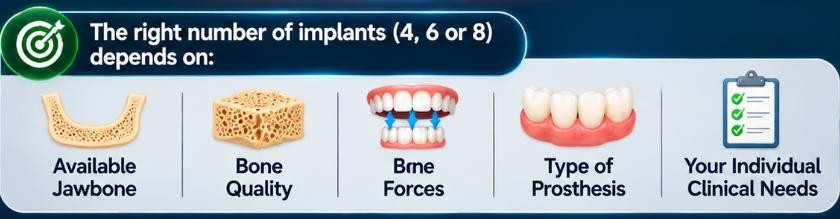
The decision should be based on the patient’s clinical requirements rather than a fixed rule. All-on-4, All-on-6, and All-on-8 are different treatment concepts, and each has its place in implant dentistry. The aim is to choose the most appropriate configuration while considering function, safety, long-term maintenance, and overall treatment value.
What If You Have Severe Bone Loss?
One of the biggest concerns for patients seeking full arch implants is insufficient jawbone. Many patients are told that they need bone grafting or a sinus lift before conventional dental implants can be placed. Although these procedures are appropriate in many cases, they are not the only possible treatment options.
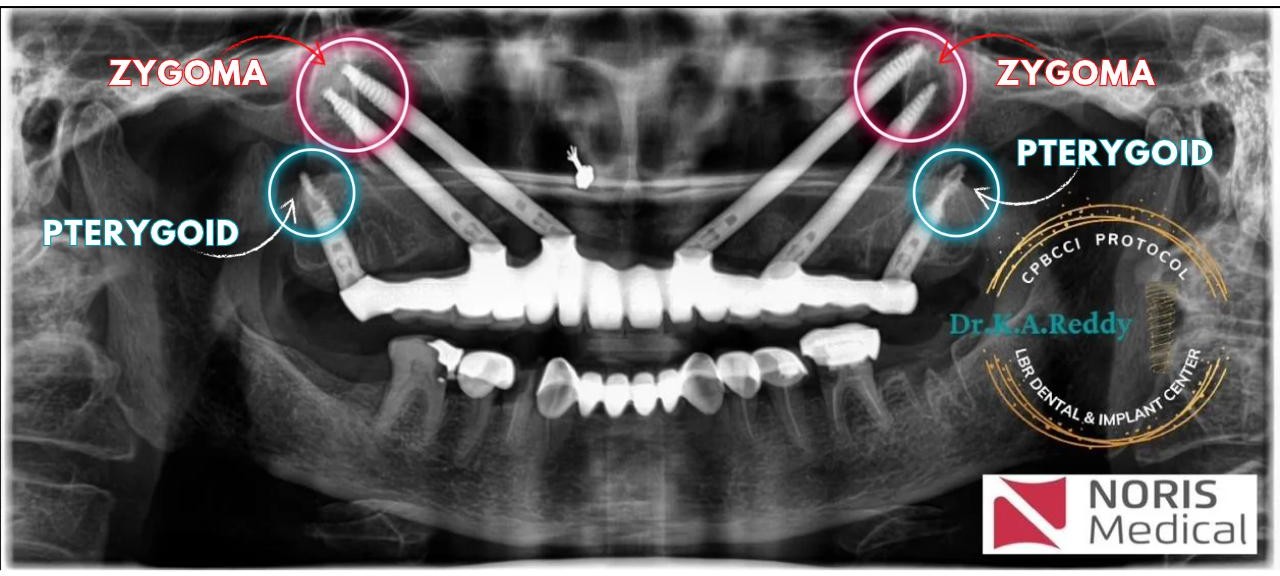
Depending on the location and extent of bone loss, carefully planned implant placement may allow some patients to avoid additional grafting procedures. Pterygoid implants may be considered for posterior support in the upper jaw, while zygomatic implants may be an option for selected patients with severe upper jaw bone loss.
Zygomatic implants obtain support from the cheekbone and can be particularly relevant in complex rehabilitation cases.
At LBR Dental & Implant Center, advanced implant planning may include conventional implants with carefully selected cortical bone engagement, pterygoid implants, zygomatic implants, or combinations of techniques where clinically appropriate. These procedures require specialist assessment, and not every patient can avoid bone grafting. The final decision depends on the available bone, anatomical structures, and the possibility of achieving adequate implant stability.
Can You Get Full Mouth Dental Implants Without Bone Grafting?
International patients frequently ask whether full mouth dental implants can be placed without bone grafting or a sinus lift. In,full mouth rehabilitation on implants cases, the answer may be yes. The possibility depends on the amount and location of available bone, the patient’s anatomy, implant positioning, and whether adequate stability can be achieved.
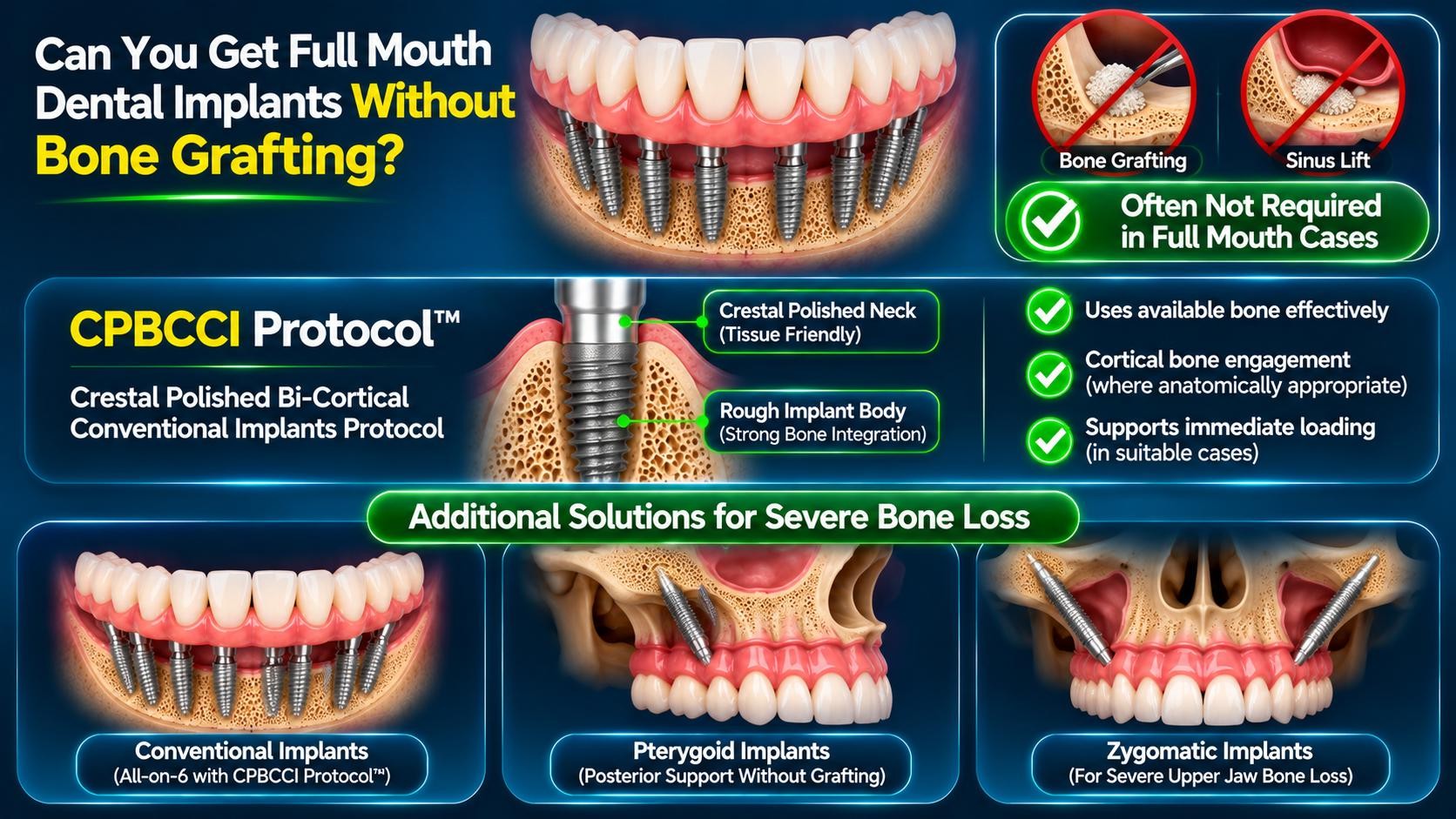
The CPBCCI Protocol™ Crestal Polished Bi-Cortical Conventional Implants Protocol is part of the treatment approach used at LBR Dental & Implant Center for selected cases. It involves the planned use of conventional implants with a polished neck and rough implant body, with cortical bone engagement where anatomically appropriate. The aim is to utilise available bone and support immediate loading in suitable cases.
For patients with severe bone loss, advanced approaches such as pterygoid or zygomatic implants may also be considered. A personalised assessment is essential before promising a particular outcome.
How Long Does Full Mouth Implant Treatment Take?
Treatment time depends on the complexity of the case, the condition of the gums and jawbone, the implant configuration, and whether immediate loading is clinically possible. Some patients can receive fixed provisional teeth soon after implant placement, while others need a healing period before their definitive restoration can be fitted.
For international patients, treatment planning can be organised around a planned visit to India. At LBR Dental & Implant Center in Hyderabad, full mouth rehabilitation cases may be coordinated within approximately 10–12 days, depending on the clinical requirements and agreed treatment plan. Before travelling, patients should discuss the
treatment plan, the type of prosthesis planned, what is included in the treatment quotation, and the arrangements for follow-up care after returning home.
Why Choose India for Full Mouth Dental Implants?

Travelling abroad for dental treatment is a major decision. Patients want experienced implant care, transparent pricing, reliable communication, and a clear understanding of what their treatment involves. India has become an attractive option for international patients because dental treatment may cost considerably less than in countries such as the USA, UK, Canada, and Australia.
LBR Dental & Implant Center in Hyderabad, provides online consultations for international patients considering full mouth rehabilitation, All-on-6, immediate-loading implants, and advanced treatment options for severe jawbone loss. Patients can discuss conventional implant solutions as well as complex rehabilitation involving pterygoid and zygomatic implants when indicated.
Dental tourism arrangements may also be available for eligible international patients, depending on the agreed package. Before booking flights, patients should obtain a personalised treatment plan, understand the expected timeline, and clarify the type of teeth being provided and the long-term maintenance requirements.
How Do You Know How Many Implants You Need?
The most reliable way to determine the number of implants for full mouth rehabilitation is through a personalised clinical assessment. A CBCT scan helps evaluate the available bone and the location of important anatomical structures. The examination also considers gum health, bite relationships, previous dental treatment, medical history, and the design of the proposed restoration.
Your implant dentist can then explain whether All-on-4, All-on-6, All-on-8, or an advanced implant configuration is appropriate for your situation. You should also discuss the material used for the replacement teeth, the expected maintenance requirements, possible complications, and the follow-up plan.
For many patients, the most important question is not simply how many implants can be placed, but how to achieve a stable, functional, and maintainable set of fixed teeth with a treatment plan that suits their individual needs.
Get Your Full Mouth Dental Implant Assessment in Hyderabad
If you are living with loose dentures, missing teeth, failing dental implants, or severe jawbone loss, you may have more treatment options than you realise. A carefully planned full mouth rehabilitation can help restore chewing function, improve comfort, and give you greater confidence in your smile.
Dr. K. A. Reddy and the team at LBR Dental & Implant Center, Hyderabad, India,provide consultations for patients considering full mouth dental implants, All-on-6, immediate loading, pterygoid implants, and zygomatic implants. For
international patients, sharing existing dental records, X-rays, and CBCT scans where available can help the clinic understand the case and discuss possible treatment options before travel.
Planning full mouth dental implants in India? Contact LBR Dental & Implant Center to discuss your case, understand the available treatment options, and plan your visit to Hyderabad.
The right treatment is not necessarily the one with the highest number of implants. It is the one that is carefully planned around your anatomy, provides appropriate support for your replacement teeth, and takes your long-term oral health into account.
QUICK ENQUIRY
Success Stories

International Patients
Our Clinic

Share this post
Author
Dr. K Sharada Reddy
Senior Dentist & Full Mouth Rehabilitation Expert