

Dr. K Sharada Reddy, Author
Senior Dentist & Full Mouth Rehabilitation Expert
All-on-6 vs Dentures: Which Is Better Long Term?
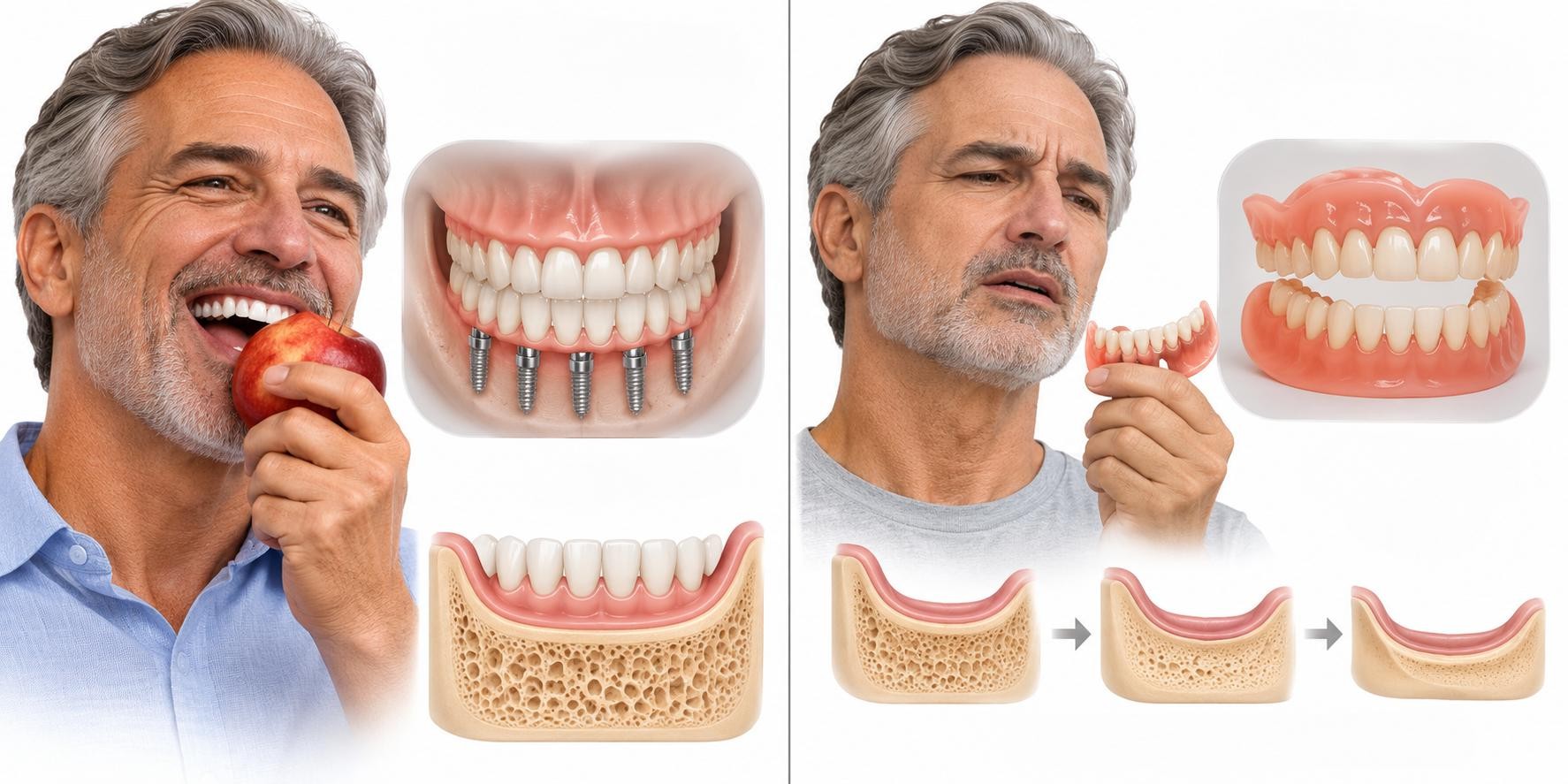
Losing most or all of your teeth can affect much more than your smile. It can make eating difficult, affect speech, reduce confidence, and gradually change the shape of your face. Fortunately, modern dentistry offers several options to replace missing teeth, including conventional removable dentures and fixed implant supported teeth. But when it comes to All-on-6 vs dentures, which option provides better long-term results?
Both treatments can restore the appearance of a complete smile, but they differ significantly in stability, chewing function, maintenance, impact on the jawbone, and overall cost over time. Understanding these differences can help you make an informed decision about your oral health and quality of life.
What Are Conventional Removable Dentures?
Conventional removable dentures are prosthetic teeth designed to replace missing teeth in the upper jaw, lower jaw, or both. They rest on the gums and depend on the underlying jaw ridge and soft tissues for support and retention. In our opinion, the biggest advantage of removable dentures is their affordability, making them an accessible option for patients looking for a relatively low-cost tooth replacement solution.
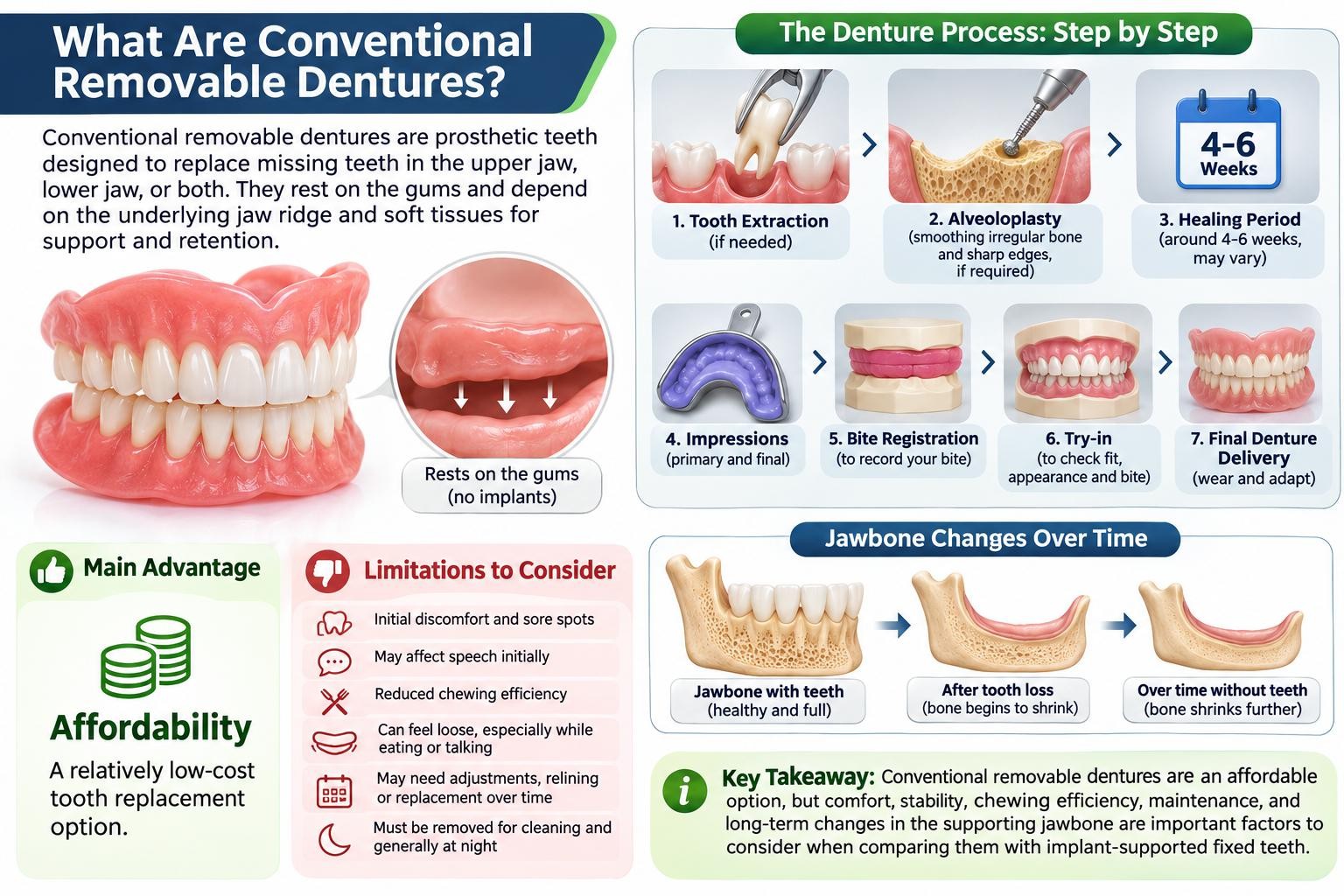
Although removable dentures are often described as a non-surgical treatment, the reality is that patients who still have teeth that need to be extracted must undergo tooth removal under local anaesthesia. In many cases, a procedure called alveoloplasty may also be required to smoothen irregular bone, remove sharp bony spicules, and prepare the jaw ridge for denture placement. Following these procedures, the tissues are generally allowed to heal and settle for approximately 4–6 weeks before denture fabrication begins, although the healing period may vary depending on the patient’s condition and the extent of surgery.
Denture fabrication itself involves several clinical steps, including primary impressions, secondary or final impressions, bite registration, and a try-in
appointment to assess the fit, appearance, and bite before the final denture is delivered. Therefore, obtaining a well-fitting conventional denture is not always as simple or immediate as patients might assume.
Since conventional dentures are primarily tissue-supported, patients need time to adapt to wearing them. They may initially experience discomfort, sore spots, difficulty speaking, reduced chewing efficiency, and problems with stability, particularly while eating or talking. As the jawbone and gums gradually change shape following tooth loss and extraction, dentures may become loose and require adjustments, relining, or replacement over time. Their removable nature also means that patients must take them out for cleaning and generally remove them at night, as advised by their dentist.
While conventional removable dentures remain an affordable option, patients should understand their limitations before choosing them as a long-term solution.
Affordability is their principal advantage, but comfort, stability, chewing efficiency, maintenance, and long-term changes in the supporting jawbone are important factors to consider when comparing removable dentures with implant-supported fixed teeth.
Limitations of Removable Dentures
1. Reduced stability and chewing efficiency
Since conventional dentures rest on the gums rather than being firmly anchored to the jawbone, they can move during eating, speaking, or laughing. Lower dentures, in particular, can be challenging to stabilise because the tongue and surrounding muscles influence their movement. Hard, crunchy, or chewy foods may become difficult to eat comfortably, and some patients gradually avoid foods they previously enjoyed.
2. Progressive jawbone loss
One of the most important long-term disadvantages of conventional dentures is their inability to provide the same direct functional stimulation to the jawbone as natural tooth roots or dental implants.
Natural tooth roots transmit chewing forces to the surrounding bone, helping maintain its structure. Following tooth loss, this stimulation decreases, and the body gradually resorbs the bone that once supported the teeth. Conventional dentures rest on the gums and do not replace the tooth roots, so they cannot prevent this process.
As the jawbone gradually shrinks, the gum ridge may become narrower or flatter. This reduces the support available for the denture, potentially making it increasingly loose and uncomfortable. The patient may then require repeated adjustments, relining, or replacement dentures.
3. Repeated adjustments and replacements
Even a well-made denture may lose its fit over time because the jawbone and gums continue to change. Periodic relining, repairs, adjustments, and eventual replacement may be necessary to maintain comfort and function. These recurring requirements can add to the long-term cost.
4. Gum soreness and tissue irritation
Movement and pressure from dentures can create sore spots, ulcers, and irritation, particularly when the fit is poor. Patients may need multiple adjustment visits before the dentures become comfortable. Wearing an ill-fitting denture for prolonged periods can worsen these problems.
5. Changes in taste and oral comfort
Upper dentures often cover a portion of the palate, which some patients find uncomfortable or notice when eating and tasting food. Excessive saliva, a gagging
sensation, difficulty adapting to the appliance, and changes in speech may also occur, particularly during the initial adjustment period.
6. Daily removal and cleaning
Removable dentures need to be taken out for thorough cleaning and generally removed at night, as advised by the dentist. Patients must maintain both the dentures and the underlying oral tissues carefully to reduce the risk of irritation, fungal infections, and other oral health problems.
Although removable dentures remain a useful and affordable option, they do not replicate the stability, chewing function, or biological support provided by natural teeth or well-functioning implant-supported restorations.
What Is the All-on-6 Dental Implant Treatment?
All-on-6 is a full-arch tooth replacement technique in which a complete set of replacement teeth is supported by six strategically positioned dental implants in the jaw. These implants act as artificial tooth roots and support a fixed prosthesis designed to replace the missing teeth.
Unlike conventional removable dentures, the replacement teeth are secured to the implants and are not removed by the patient for daily cleaning. The dentist may need to remove the prosthesis periodically for professional maintenance.
The treatment plan depends on the patient’s bone volume, gum health, bite, medical history, and other clinical factors. In selected cases, a temporary fixed prosthesis may be provided during healing, while the definitive prosthesis is placed according to the treatment plan and implant stability.
For those who are tired of struggling with removable dentures, full arch implants can offer a stable and convenient alternative to conventional removable dentures.
All-on-6 vs Dentures: The Key Differences
1. Stability and comfort
The most noticeable difference between fixed teeth and removable dentures is stability.
Conventional dentures depend on the gums and jaw ridge for support. They may move during eating or speaking, especially when the underlying bone has resorbed. Adhesives can help some patients, but they cannot correct every problem associated with poor fit or inadequate support.
All-on-6 teeth are anchored to dental implants, providing a more secure foundation. This can reduce unwanted movement and help patients feel more comfortable while eating, speaking, and socialising.
2. Chewing function and food choices
Chewing with removable dentures can be challenging, particularly when eating hard, fibrous, or chewy foods. Patients often need to modify their eating habits and may find that certain foods are difficult to manage.
Implant-supported fixed teeth generally provide better stability during chewing than conventional removable dentures. Many patients can enjoy a wider variety of foods with greater confidence once treatment is complete.
3. Jawbone preservation
Jawbone loss is an important consideration when choosing a long-term tooth replacement.
After natural teeth are lost, the surrounding bone gradually remodels and resorbs because the original tooth roots are no longer present. Conventional removable dentures sit on top of the gums and do not provide functional stimulation to the bone.
Dental implants transfer functional forces to the surrounding bone. This helps maintain bone in the areas where the implants are successfully integrated and can reduce the extent of local bone loss compared with leaving the area without implants. This is one of the key biological advantages of implant supported fixed teeth
4. Appearance and confidence
Both removable dentures and All-on-6 can improve facial appearance and restore a complete smile when properly designed.
However, some denture wearers feel self-conscious about their dentures moving, particularly while speaking or laughing. They may worry about their teeth becoming loose in social situations.
Fixed implant-supported teeth can provide greater reassurance because they remain secured during normal daily activities. Their design can also be planned to support the lips and facial profile where appropriate. The final aesthetic result depends on the patient’s anatomy, the prosthesis design, and the clinical situation.
5. Long-term cost and maintenance
Conventional removable dentures generally have a lower initial cost, Nevertheless, they may require periodic adjustments, relining, repairs, adhesives, and eventual replacement as the shape of the jaw changes.
All-on-6 involves a higher initial investment, covering implant placement, the fixed prosthesis, and associated treatment. However, the long-term benefits of a fixed set of teeth are truly priceless. The comfort of eating confidently, speaking naturally, smiling without hesitation, and enjoying the freedom of living without removable dentures can far outweigh the initial cost. When viewed as a long-term investment in
comfort, confidence, and quality of life, All-on-6 offers value that goes well beyond money.
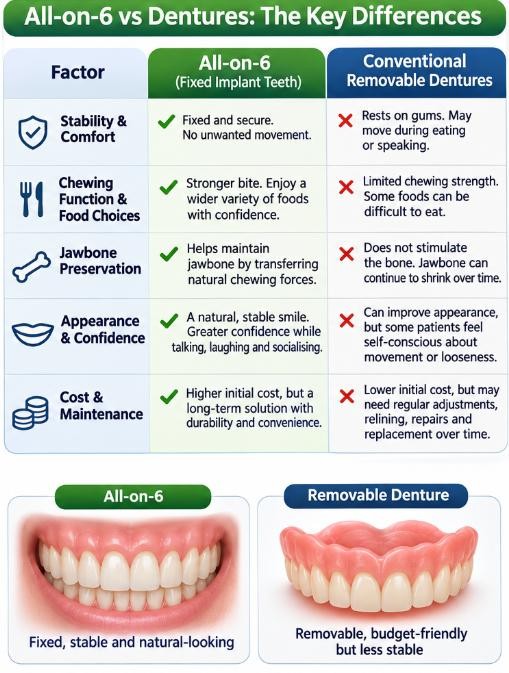
Therefore, the long-term cost of either treatment depends on individual needs, the quality and design of the restoration, oral hygiene, and the frequency of maintenance. Although removable dentures are generally more affordable initially, repeated adjustments and replacements may increase their cumulative cost. All-on-6 may offer long-term value to eligible patients who prioritise stability, chewing function, and convenience, but it should not be assumed to be less expensive over a lifetime in every case.
How Long Do All-on-6 Implants and Dentures Last?
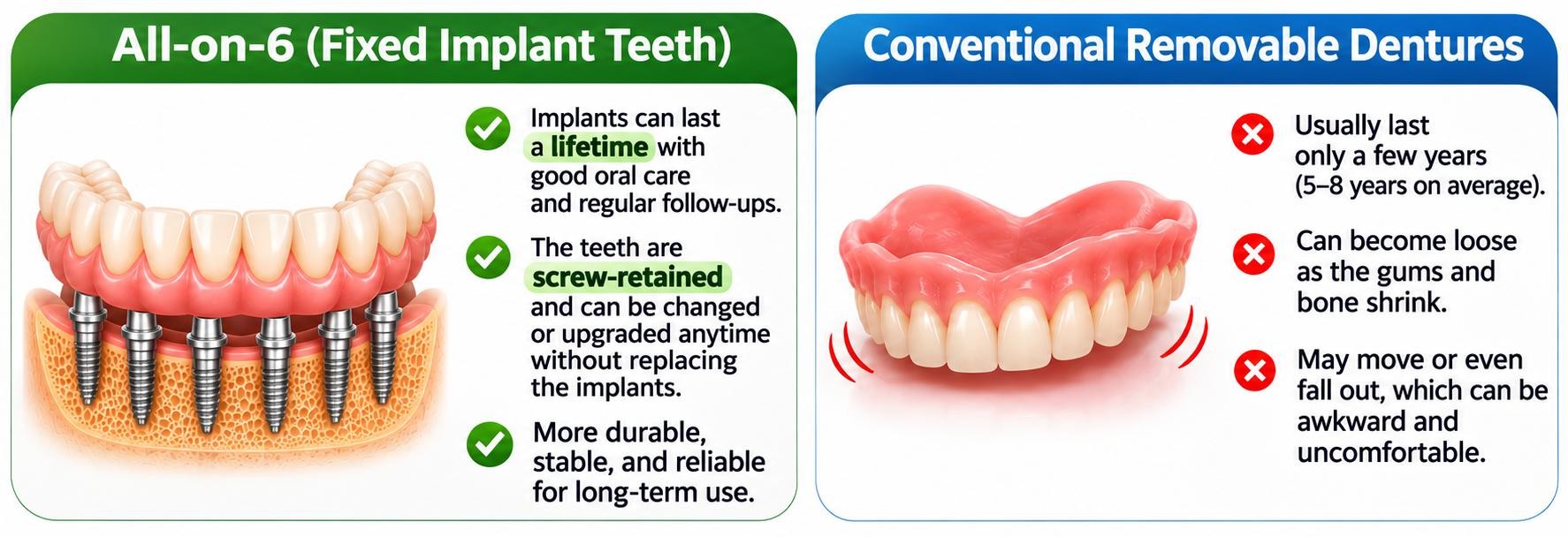
The lifespan of either treatment depends on several factors, including oral hygiene, regular maintenance, bite forces, material quality, and changes in the patient’s oral health.
Conventional dentures can function for years, but their fit may deteriorate as the gums and jawbone change. They may require relining, repairs, or replacement to maintain comfort and function.
Dental implants can also function for many years when properly placed and maintained. However, the implants and the prosthesis are not the same thing: an implant may remain integrated while the teeth attached to it require repairs or replacement due to wear or damage. Neither option should be considered maintenance-free. Regular dental visits and appropriate home care are essential regardless of the treatment selected.
All-on-6 vs Dentures: Which Is Better Long Term?
When considering All-on-6 vs dentures, the better option depends on what the patient needs from their replacement teeth.
Conventional removable dentures offer affordability, avoid implant surgery, and remain a practical solution for many patients. However, they can move during eating and speaking, may require repeated adjustments, and do not provide the same functional stimulation to the jawbone as dental implants.
All-on-6 offers eligible patients the advantages of fixed teeth, improved stability, generally better chewing function, and functional stimulation of the bone around the implants. It also eliminates the need to remove the teeth daily, although professional maintenance remains essential. These benefits come with a higher initial cost, surgical requirements, and a commitment to careful oral hygiene and follow-up care.
Ultimately, choosing between fixed teeth vs dentures is not simply about appearance or price. It is about selecting a treatment that supports oral health, comfort, function, and confidence over the long term.
If you are considering replacing all your missing teeth, consult a qualified dental professional for an individual assessment. Understanding the benefits, limitations,
maintenance requirements, and costs of each option will help you make a decision that is appropriate for your health, expectations, and lifestyle.
A well-planned tooth replacement should do more than restore a smile. It should help you eat comfortably, speak confidently, maintain oral health, and enjoy a better quality of life for years to come.
QUICK ENQUIRY

Success Stories

International Patients
Our Clinic

Share this post
Author
Dr. K Sharada Reddy
Senior Dentist & Full Mouth Rehabilitation Expert