

Dr. K Sharada Reddy, Author
Senior Dentist & Full Mouth Rehabilitation Expert
Zygomatic + Pterygoid Implants for Severe Upper Jaw Bone Loss
When a patient has lost a significant amount of bone in the upper jaw, conventional dental implants can become challenging. In the past, treatment often involved procedures such as bone grafting or sinus augmentation before implants could be placed. Today, Zygomatic and pterygoid implants can provide an alternative approach for carefully selected patients with advanced bone loss. Instead of trying to rebuild the entire missing bone, these techniques allow the implant surgeon to make use of stronger areas of existing bone for support.
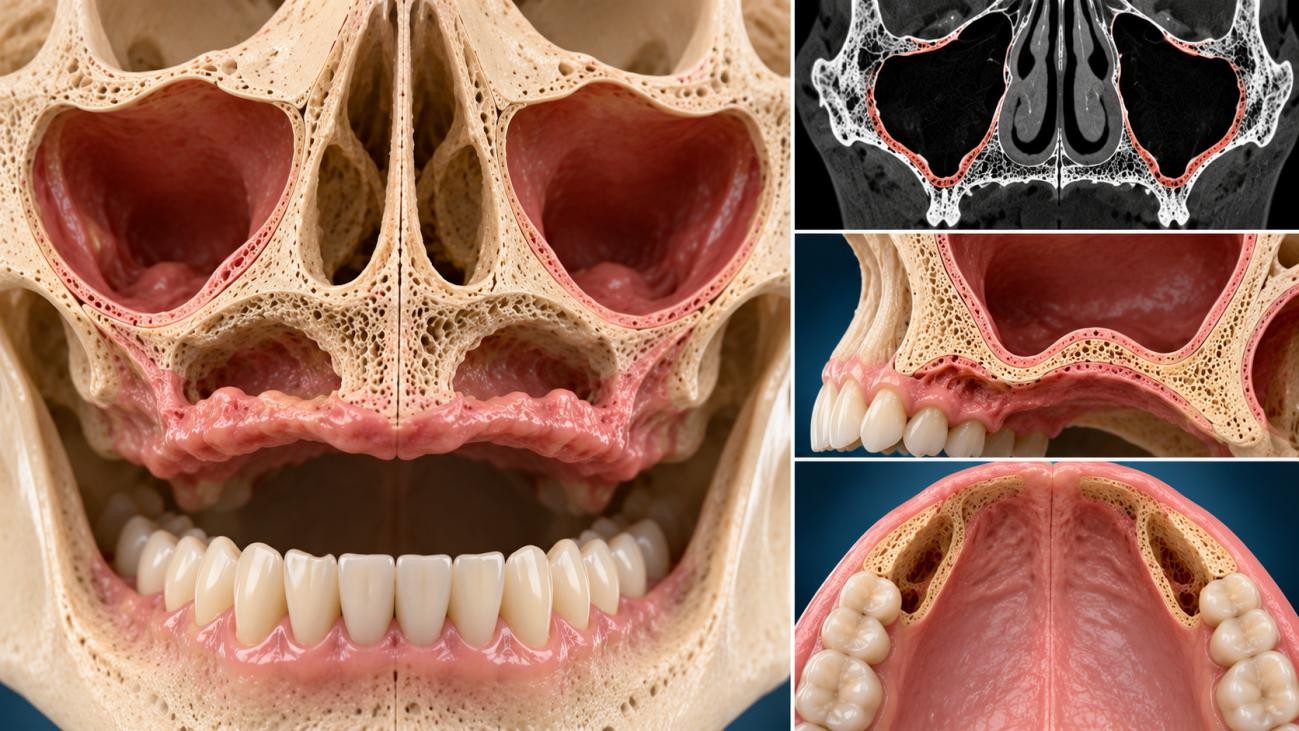
Severe maxillary bone loss can develop after many years of missing teeth, advanced gum disease, failed implants, trauma, infection, or extensive bone removal following certain medical conditions like Mucormycosis. As the jawbone gradually resorbs, there may not be enough conventional bone available to place regular implants in their usual positions. This is where Zygomatic and pterygoid implants may become valuable. The treatment is planned using detailed CBCT imaging to understand the remaining bone and identify the safest and most suitable areas for implant anchorage.
What Are Zygomatic Implants?
Zygomatic implants are longer dental implants designed to obtain support from the Zygomatic bone, commonly known as the cheekbone. Unlike conventional implants, which depend mainly on the remaining maxillary bone, Zygomatic implants extend through the severely resorbed upper jaw and engage the stronger Zygomatic bone.
This can make fixed implant-supported teeth possible even in patients with very limited bone in the posterior and anterior maxilla. Depending on the amount and location of bone available, treatment may involve two or four Zygomatic implants, sometimes combined with conventional or other tilted implants.
What Are Pterygoid Implants?
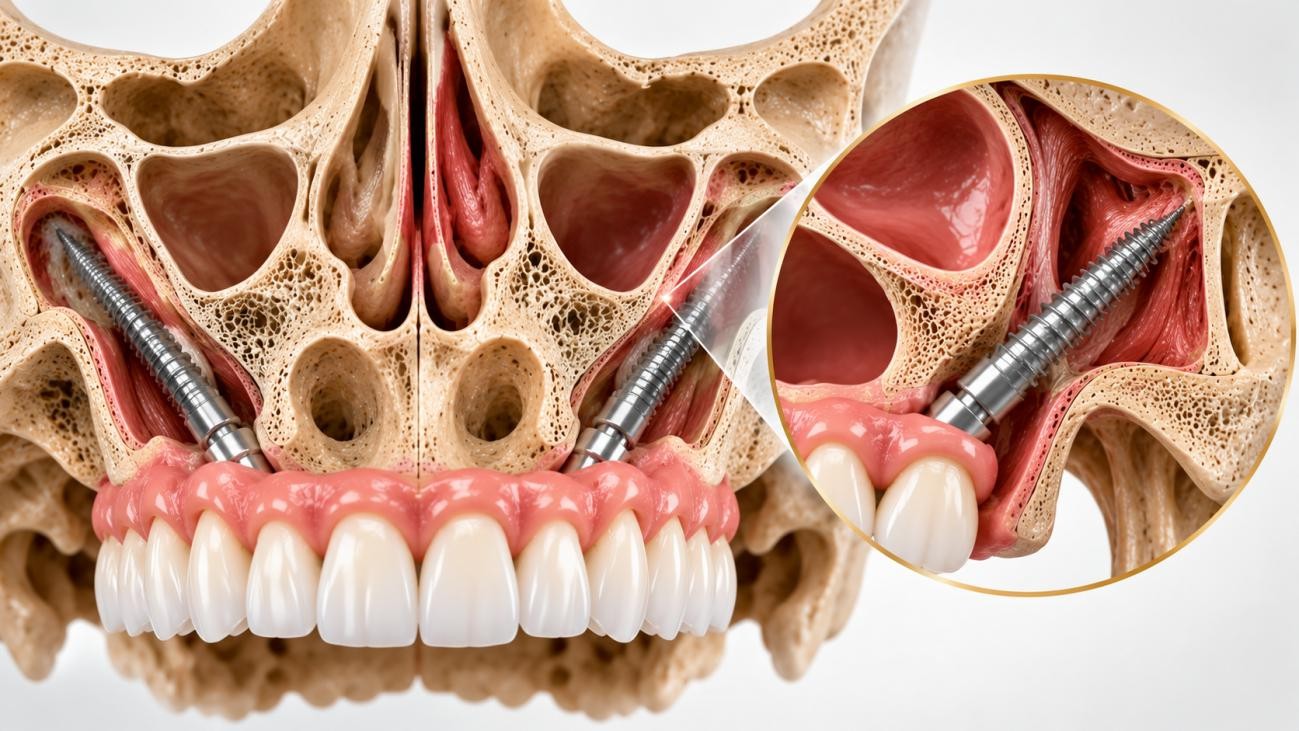
Pterygoid implants are placed in the posterior region of the upper jaw and are designed to engage dense bone around the pterygoid region. This area can provide strong posterior anchorage when the posterior maxilla has insufficient bone for conventional implant placement. One of the important advantages of pterygoid implants is that they avoid the need for a sinus lift by using available anatomical bone rather than attempting to increase the height of the posterior maxilla through grafting.
Why Combine Zygomatic and Pterygoid Implants?
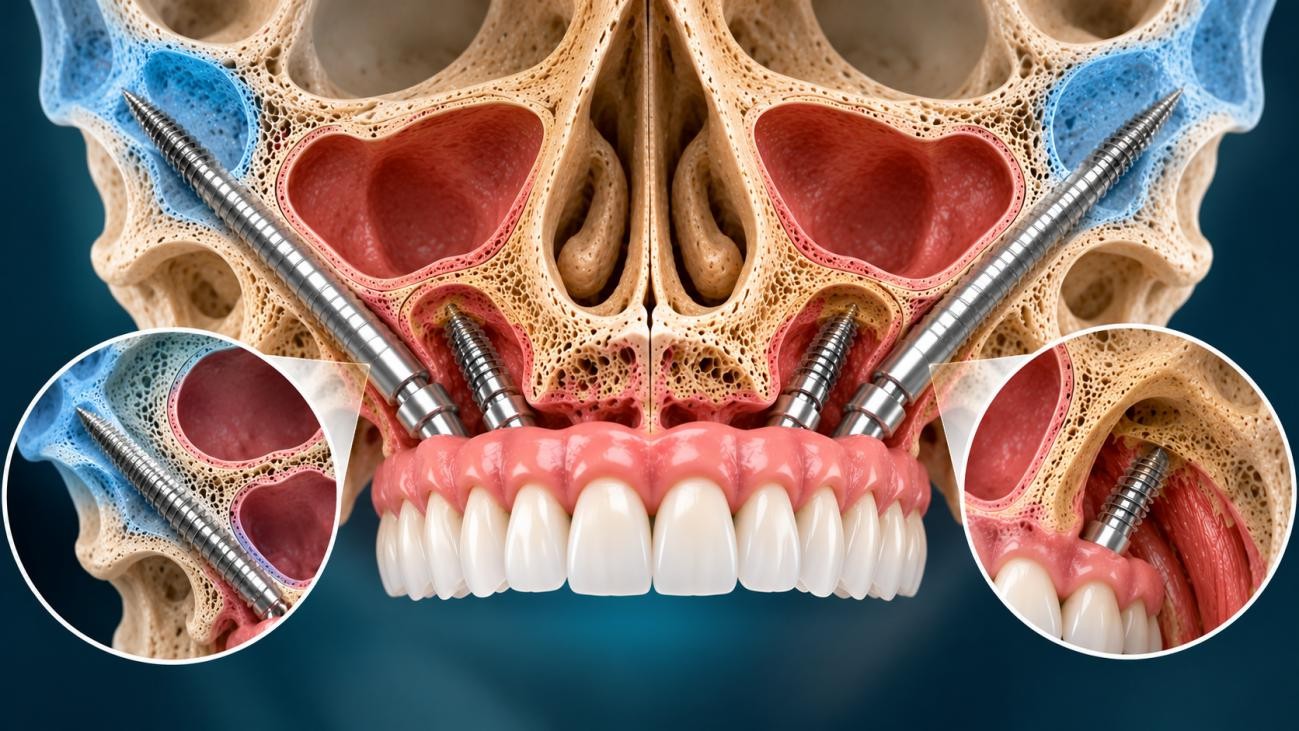
In some patients, using only one type of implant may not provide the ideal distribution of support. A combination of zygomatic and pterygoid implants can provide strategically positioned anchorage across the upper arch. The exact implant design depends on the patient’s CBCT scan, bone anatomy, previous treatment, sinus
condition, occlusion and prosthetic requirements. The objective is not simply to place as many implants as possible, but to create a stable foundation for a properly designed fixed prosthesis.
Zygomatic Implants for Severe Bone Loss
One of the most important developments for patients with advanced upper-jaw bone implants strategically to engage available cortical bone and achieve the stability required for immediate loading when the clinical conditions permit.
One of the key principles is that implant treatment should be planned around the patient’s available anatomy, rather than assuming that extensive bone reconstruction is always necessary.
The concept behind Zygomatic implants and pterygoid implants is particularly useful in severely resorbed maxillae where conventional implant placement would be difficult without extensive augmentation. By using the stronger anatomical structures that remain, the treatment can sometimes reduce the need for traditional bone-rebuilding procedures. However, this is a highly technique-sensitive procedure and requires detailed diagnosis, surgical planning and prosthetic coordination.
Is Bone Grafting Always Necessary?
Not necessarily. One of the reasons patients with severe maxillary bone loss are evaluated for zygomatic and pterygoid implant treatment is that these implants can use alternative areas of strong bone for anchorage. This may allow treatment in situations where conventional implants would otherwise require bone grafting or a sinus lift. Whether grafting can actually be avoided depends entirely on the individual anatomy and treatment plan. A CBCT scan is essential before making this decision.
What About Patients With Previous Failed Implants?
Patients who have experienced failed conventional implants may have even less available bone and can present with additional challenges such as bone defects, infection or altered anatomy. In such cases, simply repeating the same implant approach may not be the best solution. Zygomatic and pterygoid implants can sometimes offer alternative anchorage in areas that are less affected by the previous implant failure. Careful evaluation of the cause of failure is essential before planning another rehabilitation.
Fixed Teeth After Implant Placement
The purpose of Zygomatic and pterygoid implant treatment is not merely to place implants but to provide a stable foundation for immediate loading of functional, fixed teeth. The final restoration needs to be designed carefully to control forces, maintain hygiene and provide a natural appearance. A strong surgical foundation must always be matched with a well-planned prosthesis.
Who May Be a Candidate?
Patients with severe upper jaw resorption, extensive posterior bone loss, previous failed implants, advanced periodontal bone loss or limited bone available for conventional implant placement may be candidates for this type of treatment.
Planning Is the Most Important Step
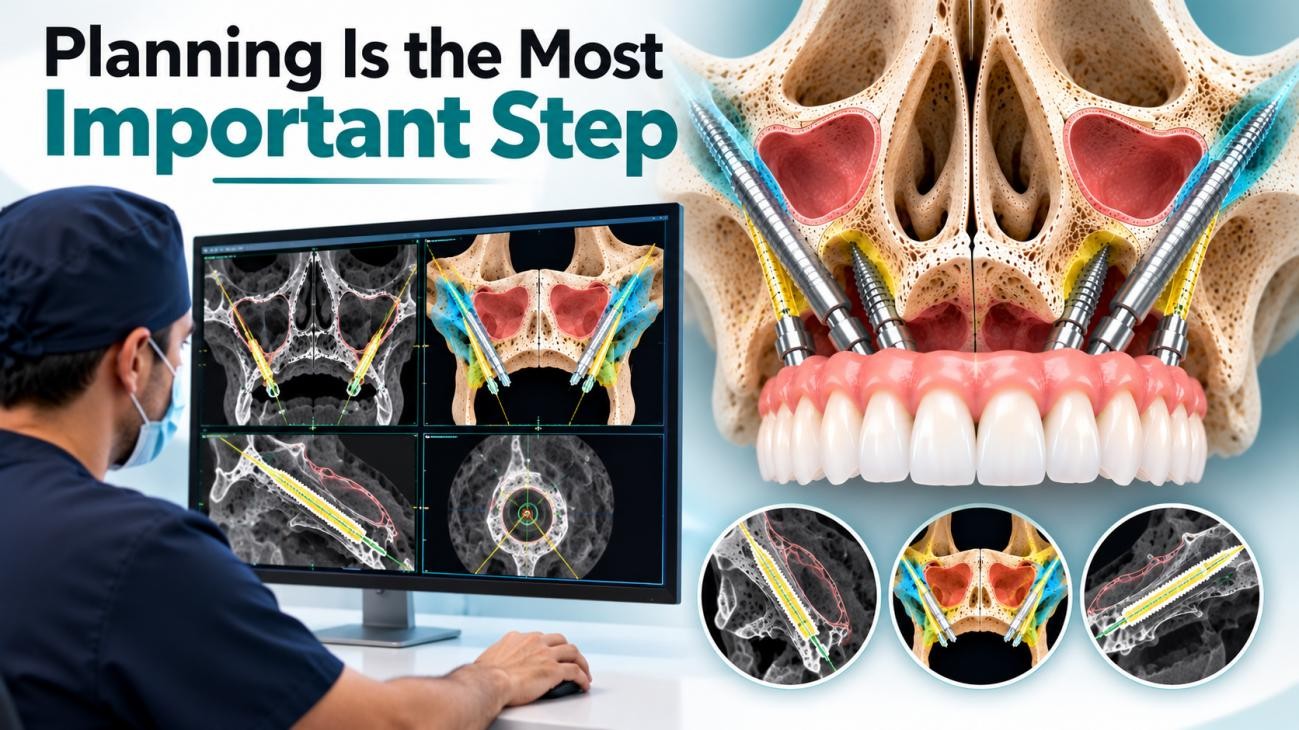
Successful treatment begins long before the surgical procedure. A three-dimensional CBCT evaluation helps the implant surgeon understand the relationship between the maxilla, zygomatic bone, pterygoid region, sinus and other important anatomical
QUICK ENQUIRY
Success Stories

International Patients
Our Clinic

Share this post
Author
Dr. K Sharada Reddy
Senior Dentist & Full Mouth Rehabilitation Expert