

Dr. K Sharada Reddy, Author
Senior Dentist & Full Mouth Rehabilitation Expert
No Bone for Dental Implants? Understanding Your Treatment Options
Being told that you have “no bone for dental implants” can be discouraging. Many patients immediately assume that dental implants are no longer an option and that they will have to live with removable dentures. But the situation is often more complex than that. Severe bone loss does not necessarily mean that you cannot have fixed teeth.
Modern implant dentistry offers several treatment approaches depending on the amount and location of available bone, your overall oral health, and the anatomy of your jaw.
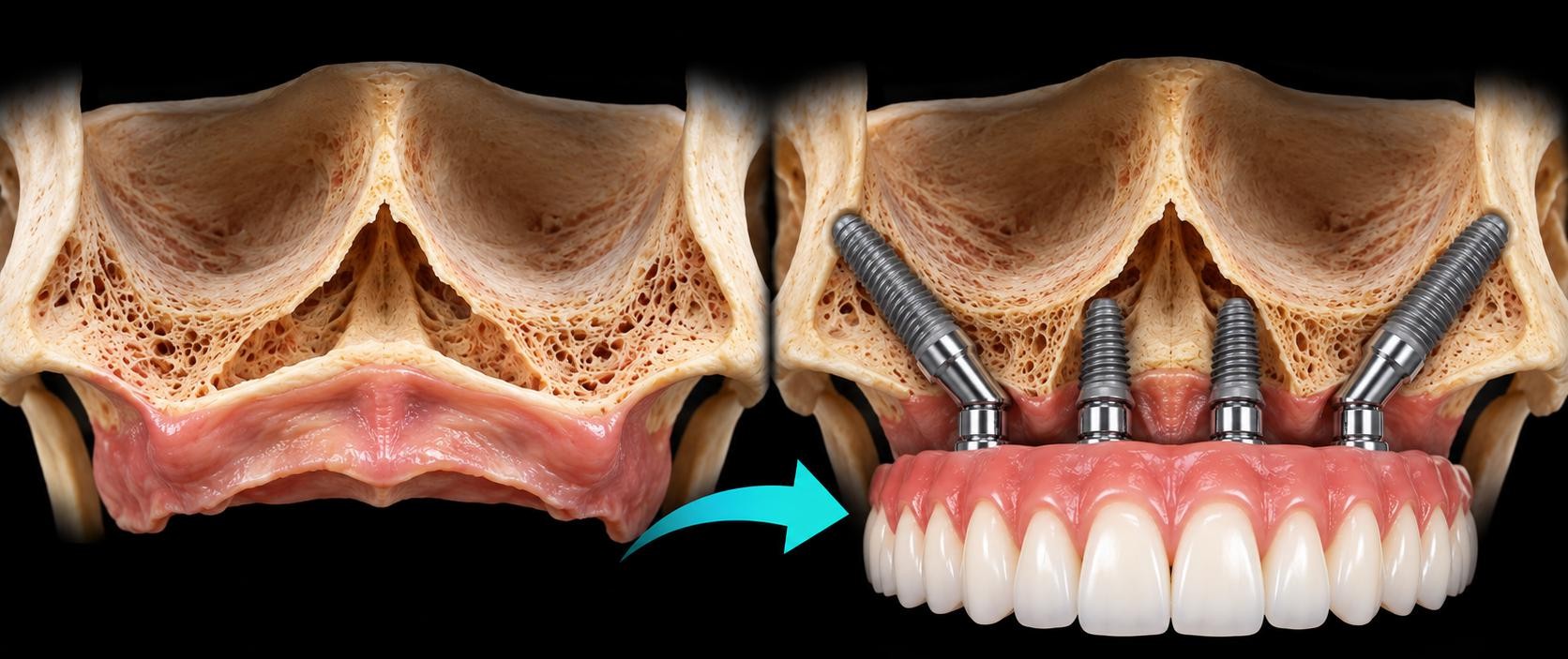
When a tooth is lost, the surrounding jawbone gradually begins to shrink because it is no longer receiving stimulation from the tooth root. If several teeth have been missing for many years, this bone loss can become significant. Gum disease, previous failed implants, trauma, infections, and long-term denture use can also contribute to severe bone loss. Eventually, some patients are told that there is not enough bone to place conventional dental implants. This is where careful diagnosis and advanced treatment planning become extremely important.
Does “No Bone” Really Mean You Cannot Have Dental Implants?
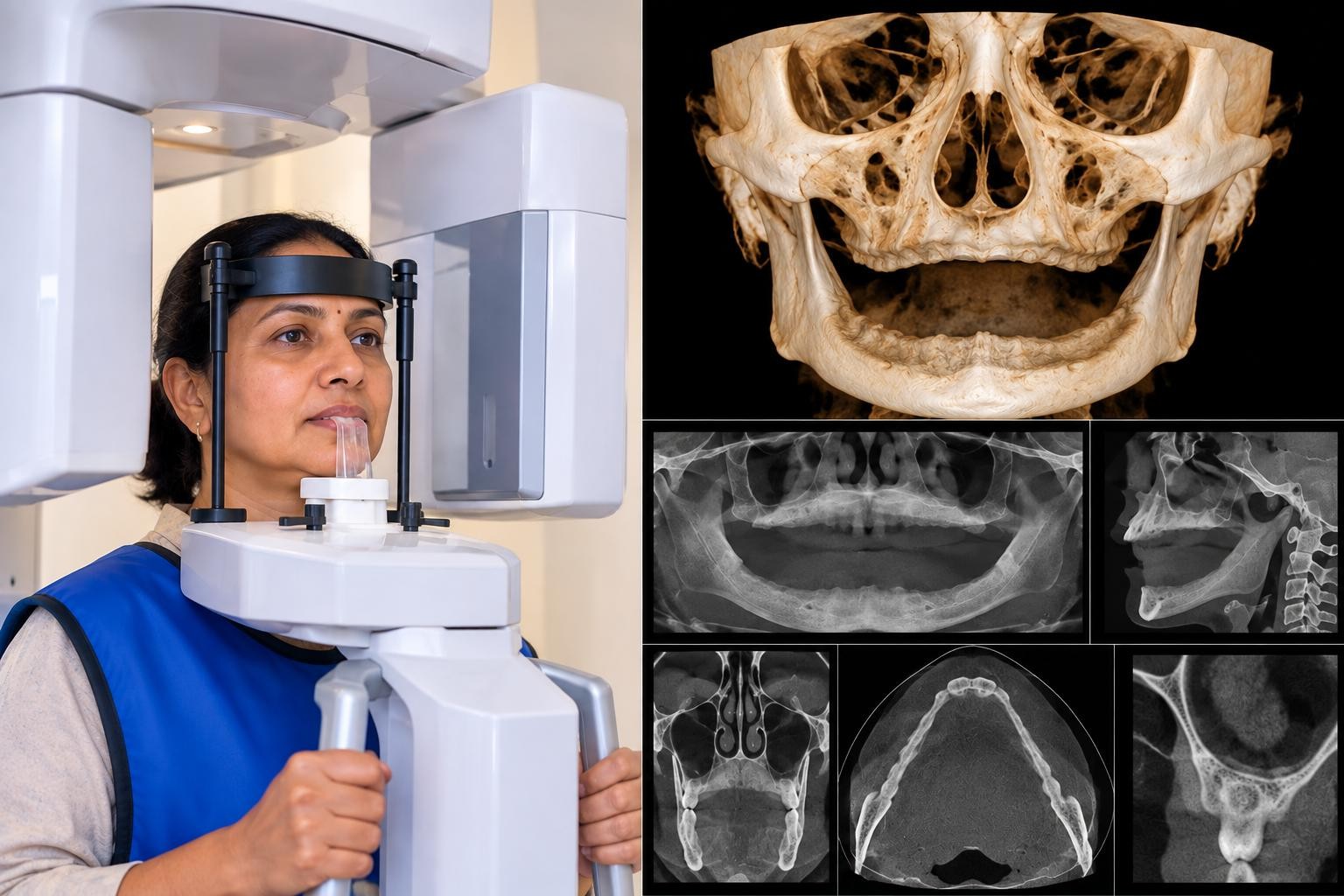
Not always. When a patient says, “I have no bone for implants,” it is important to understand exactly what that means. Sometimes there may be insufficient bone in the conventional implant placement area, but useful bone may still be available in other anatomical regions. A CBCT scan allows the implant specialist to evaluate the three-dimensional anatomy of the jaw and determine what treatment options may be possible.
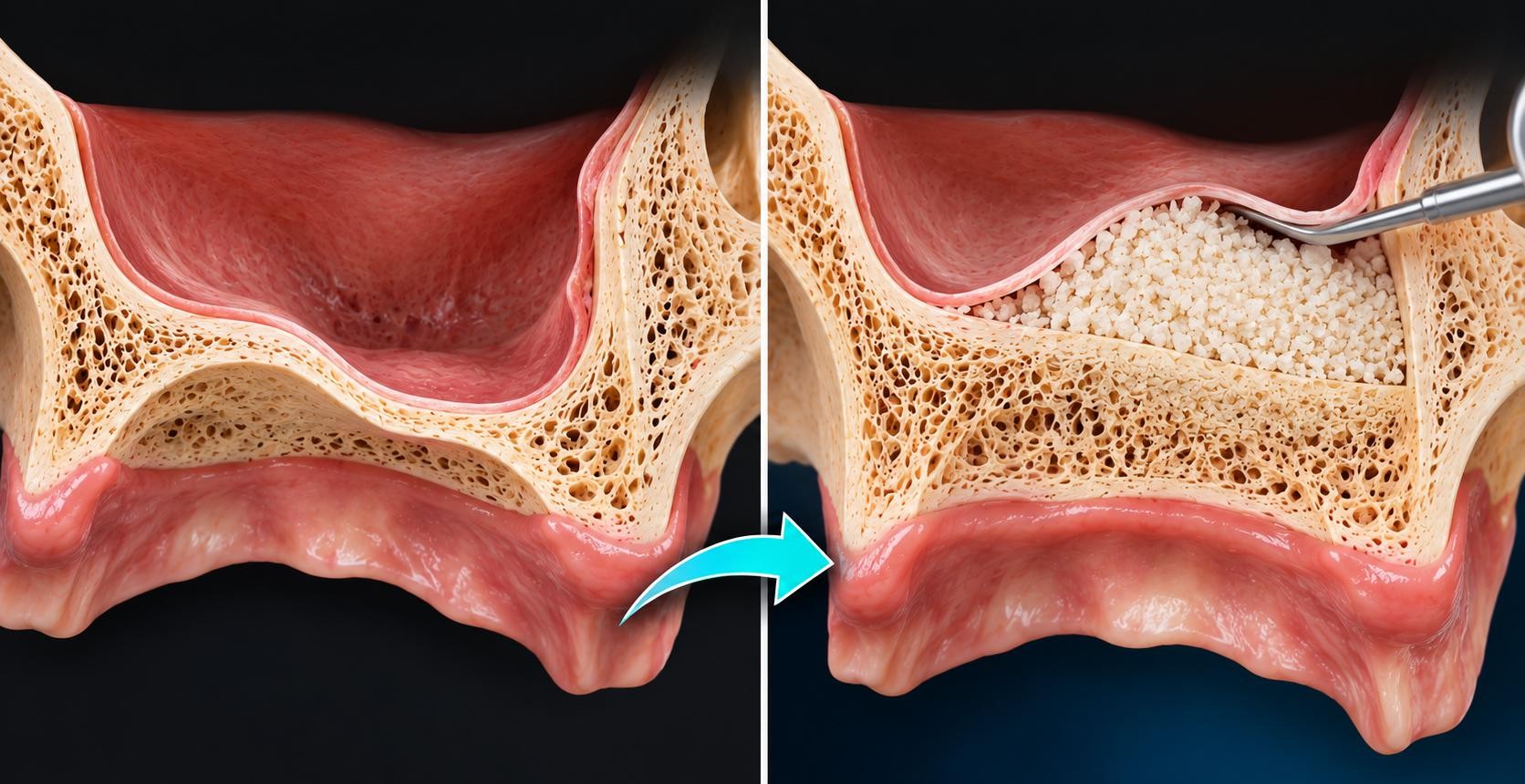
In patients with severe bone loss, the traditional approach may involve bone grafting to rebuild the jaw before placing implants. In selected cases, sinus augmentation may also be recommended when there is insufficient bone in the back of the upper jaw. These procedures can be effective, but they may involve additional surgery, healing time, expense, and multiple treatment stages.
For this reason, patients increasingly ask whether there are alternatives to bone grafting.
Dental Implants Without Bone Grafting
For patients with severe bone loss, there are treatment approaches that can avoid conventional bone grafting. Instead of trying to rebuild the missing bone, the treatment plan may make use of the patient’s existing anatomical structures and available cortical bone.
This is particularly important for patients who have been told that they have no bone for dental implants, especially when they are looking for a immediate fixed full-mouth solution as grafted bone takes time to integrate and delays the procedure by several months.
What Are the Options for Implants With Severe Bone Loss?
There is no single solution for every patient with severe bone loss. Depending on the clinical situation, treatment may include conventional implants in the available bone, tilted implants, pterygoid implants, bone grafting, sinus augmentation, or Zygomatic implants.
In some patients, strategically placed implants can make use of stronger areas of available bone rather than relying entirely on the severely resorbed ridge. Pterygoid implants, for example, can be placed in patients with significant posterior maxillary bone loss and also for a rigid posterior support and avoid cantilevers in the prosthesis. They engage anatomical structures in the posterior region of the upper jaw and can be incorporated into full-arch implant rehabilitation and also while replacing teeth in the upper posterior region.
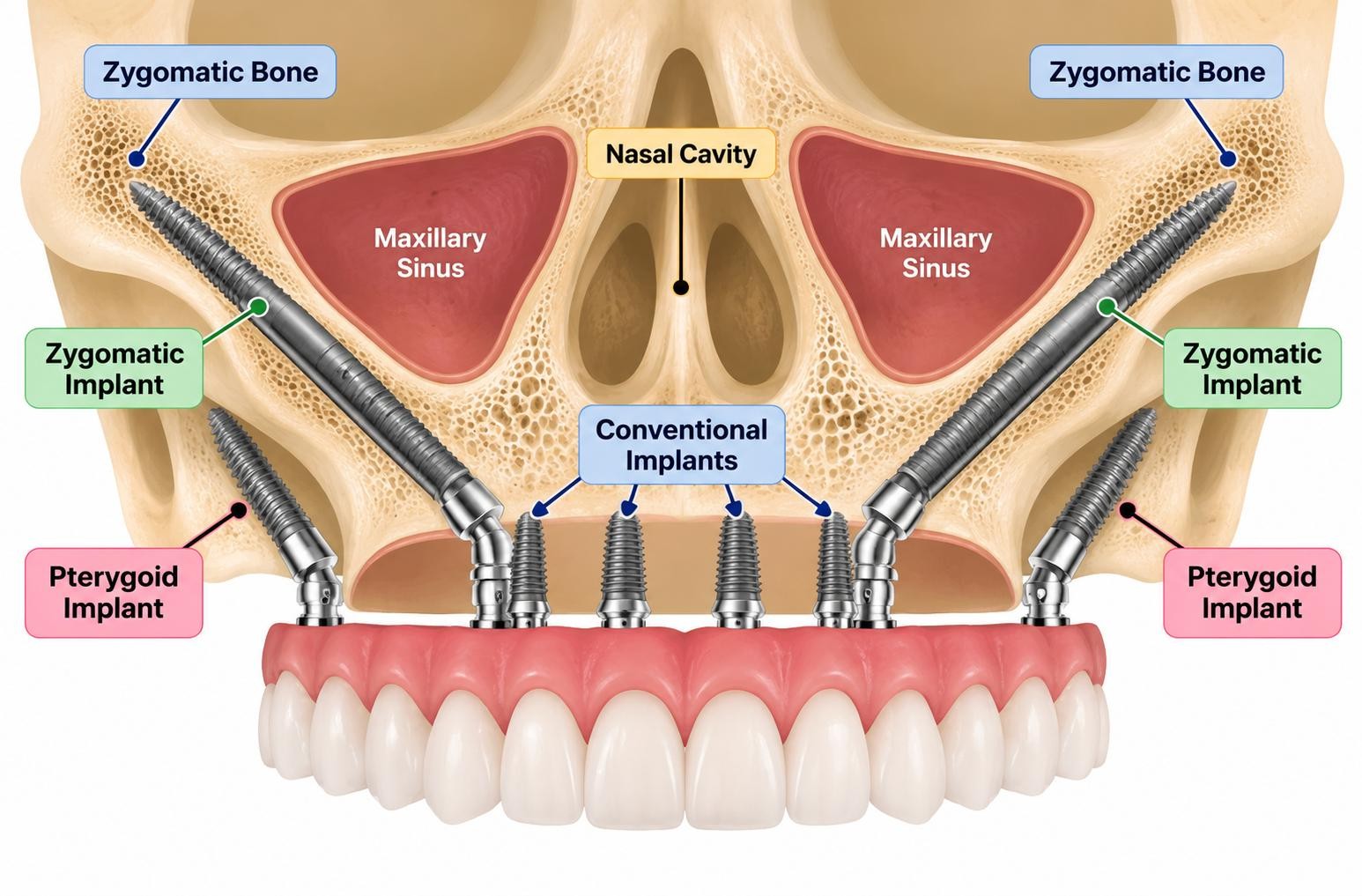
For patients with extreme loss of the upper jaw bone, zygomatic implants may provide another treatment option. These longer implants are anchored in the zygomatic bone rather than relying primarily on the severely resorbed upper jaw ridge. In carefully selected cases, zygomatic implants can help provide support for a fixed full-arch prosthesis even when conventional implant placement is severely limited.
Zygomatic Implants for Severe Bone Loss
One of the most important developments for patients with advanced upper-jaw bone implants strategically to engage available cortical bone and achieve the stability required for immediate loading when the clinical conditions permit.
One of the key principles is that implant treatment should be planned around the patient’s available anatomy, rather than assuming that extensive bone reconstruction is always necessary.
What If I Have Almost No Bone?
This is where advanced implant planning becomes particularly important.
A patient may have severe bone loss in one region but adequate anatomical structures elsewhere. Rather than simply looking at the missing bone, an experienced implant specialist evaluates where stable bone is actually available and how that bone can be used to support the final prosthesis.
For some patients, a combination of conventional and advanced implants may be considered. In severe maxillary cases, zygomatic implants may be part of the treatment strategy.There is no universal answer to “What can I do if I have no bone?” The correct answer comes from a detailed assessment of your individual anatomy.
What Happens During the Evaluation?
The first step is a comprehensive examination. A CBCT scan for dental implants provides three-dimensional information about the jawbone and surrounding anatomical structures. Your dentist or implant specialist will evaluate the available bone, bone quality, sinus anatomy, previous implants, gum condition, bite, and the position of important anatomical structures.
The prosthetic plan is equally important. The goal is not simply to place implants; it is to create stable, functional and natural-looking fixed teeth supported by implants.
Don't Let the Words “No Bone” End the Conversation
If you have been told that you have no bone for dental implants, don’t immediately assume that you have run out of options. At the same time, be cautious of anyone promising that every patient can receive implants without grafting or that every case can be completed in exactly the same way.
Every jaw is different.
The right treatment depends on your anatomy, medical history, previous dental treatment, bone availability, gum health, bite, expectations, and the experience of the implant team. Sometimes the best solution is bone grafting. Sometimes it is a graftless approach. In selected severe cases, zygomatic implants, pterygoid implants, or other advanced implant techniques may provide an alternative.
The most important thing is to get a proper diagnosis and understand all the treatment options available for your particular situation.
A New Possibility for Patients With Severe Bone Loss
For many years, patients with advanced bone loss were often told that they had only two choices: undergo extensive bone grafting or continue with removable dentures. Today, implant dentistry has evolved considerably.
With advanced imaging, digital treatment planning, conventional implant techniques, cortical anchorage concepts, pterygoid implants, zygomatic implants, and graftless implant protocols, selected patients may have additional possibilities for fixed teeth.
If you have been told that you have “no bone for dental implants,” the next question should not necessarily be, “Can I have implants?”
It should be:
“What implant treatment options are possible with the available bone and anatomy I have?”
That change in perspective can open the door to solutions that patients may not have known existed.
QUICK ENQUIRY

Success Stories

International Patients
Our Clinic

Share this post
Author
Dr. K Sharada Reddy
Senior Dentist & Full Mouth Rehabilitation Expert