

Dr. K Sharada Reddy, Author
Senior Dentist & Full Mouth Rehabilitation Expert
One of the most frequently asked questions by patients considering dental implants is, “Can I eat normally after dental implants?” This concern is completely natural, as eating comfortably is essential to daily life and overall health.

The good news is that dental implants are designed to restore near-natural chewing ability, allowing patients to enjoy their favorite foods again with confidence. The speed at which normal eating is achieved depends on several factors, including the type of implant system used, bone quality, and the loading protocol selected.
Dental implants function as artificial tooth roots that integrate with the jawbone, creating a strong and stable foundation for fixed teeth. Unlike removable dentures, implants do not slip or move, enabling a stronger bite force, better chewing efficiency, clearer speech, and superior comfort. With advances in implant technology, patients today can regain function much faster than traditional treatment timelines.
How Immediate Loading Dental Implants Help You Eat Faster
Immediate loading dental implants represent a major advancement in implant dentistry, allowing fixed permanent teeth to be placed within 7 days after implant placement. This technique eliminates the long waiting period traditionally required for healing and enables patients to return to eating much sooner.
Immediate loading is achieved by placing implants with high primary stability and carefully distributing chewing forces across multiple implants using a fixed prosthesis.
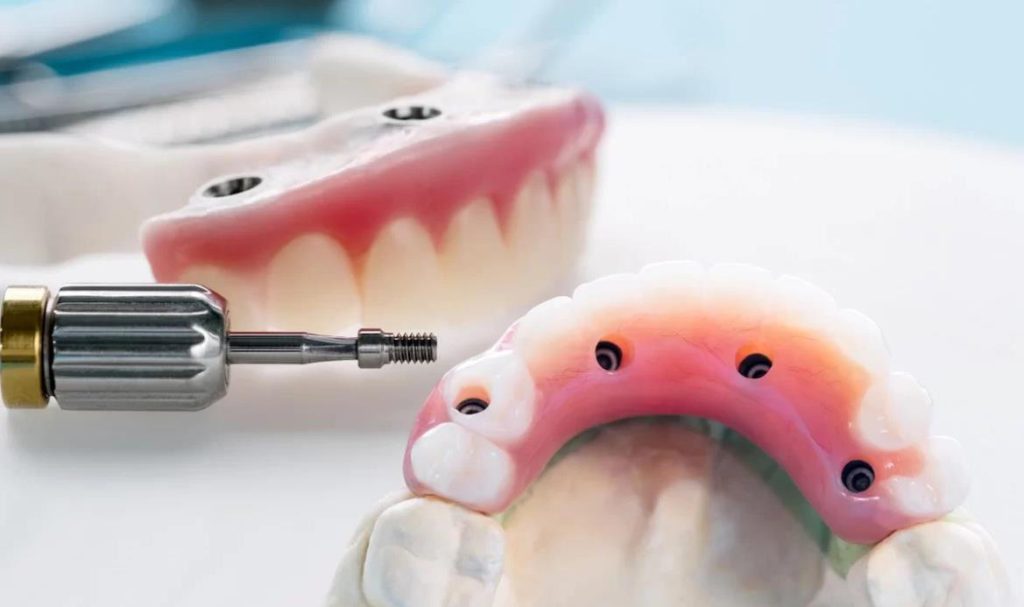
Patients receiving immediate loading implants can typically begin eating a regular diet immediately after permanent teeth fixation. This approach not only restores chewing function quickly but also improves confidence, comfort, and overall quality of life.
Immediate loading dental implants are particularly beneficial for full-mouth rehabilitation cases and for patients seeking fixed teeth in a short time. However, patients considering immediate loading should also understand the long-term benefits and limitations of different implant systems, including whether the implants are globally approved and supported by long-term clinical evidence
Role of Basal Implants in Immediate Chewing Function
Basal implants are designed to engage the dense basal (cortical) bone, making them suitable for immediate loading of teeth. While they can provide quick chewing function, they also have certain drawbacks.
Basal implants primarily achieve osseofixation rather than true OsseoIntegration, and they support cement-retained prostheses, which may pose complications over the long term. As a result, immediate loading remains their primary advantage, while long-term bio mechanical and prosthetic concerns must be carefully considered.
Why Conventional Dental Implants Still Remain the Gold Standard
While basal implants may be used in compromised bone conditions, conventional two-piece dental implants continue to be the gold standard in implant dentistry due to their extensive long-term clinical success and predictable outcomes.
Conventional implants closely mimic natural tooth anatomy and biomechanics, making them ideal for patients seeking durable, aesthetic, and functionally superior teeth. Traditionally, these implants require a healing period of 3–4 months before final loading, during which patients follow a soft-diet protocol.
However, FDA-approved conventional implants can now be immediately loaded using the CPBCCI Protocol. The CPBCCI (Crestal Polished Bicortical Conventional Implants) Protocol, introduced by Dr. K. A. Reddy, utilizes tilted implant placement to engage areas of higher bone density and allow placement of implants with optimal length and stability.
Using this protocol, patients can resume eating much sooner without undergoing invasive procedures such as bone grafting or sinus lifts. Once healing is complete, conventional implants provide excellent chewing efficiency, superior aesthetics, and long-term durability, allowing patients to eat virtually all types of food without restriction.
Immediate Loading vs Conventional Implants: Eating & Function Comparison
| Feature | Immediate Loading Implants | Delayed Loading (Conventional) Implants |
|---|---|---|
| Fixed teeth placement | Within 3–7 days | After healing period (3–6 months) |
| Early chewing ability | Yes, near-normal diet | Gradual progression after loading of teeth |
| Initial stability requirement | Very high primary stability essential | Moderate primary stability acceptable |
| Healing phase experience | Fixed permanent teeth present | Often removable denture or no teeth in some cases |
| Bone requirement | Moderate to low (engages cortical bone) | Moderate to adequate bone volume preferred |
| Need for bone grafting / sinus lift | Usually avoided | Often required in deficient bone |
| Treatment duration | Short (days to weeks) | Long (months) |
| Patient comfort during healing | High, no removable appliance | Variable, removable dentures may be needed |
| Aesthetic continuity | Maintained immediately | Temporary aesthetic compromise possible |
| Speech adaptation | Faster due to fixed teeth | May be affected with removable prosthesis |
| Dietary restriction period | Short (soft diet initially) | Longer restriction until final loading |
| Risk during healing | Requires strict bite control | Lower functional load during healing |
| Clinical technique sensitivity | Requires expert planning | Moderate |
| Long-term success | Excellent (when properly executed) | Excellent |
| Clinical evidence | Strong | Strong |
| Overall patient satisfaction | Very high due to immediate function | High after completion of treatment |
Can You Truly Eat Normally After Dental Implants?
Yes. Patients can eat normally after dental implants, whether immediate loading implants, basal implants, or conventional implants using the CPBCCI Protocol are chosen.
While traditional conventional implant placement often requires bone grafting, sinus lifts, and prolonged healing, the CPBCCI Protocol enables immediate loading without invasive additional surgeries, even in compromised or no-bone cases.
This approach relies on existing natural bone structures, such as the pterygoid bone and zygomatic bone in the upper jaw, and nerve bypass techniques in the lower jaw, delivering exceptional long-term stability, comfort, and reliability.
As a result, this method can deliver exceptional long-term stability, comfort, and
functional reliability.
A comprehensive evaluation by an experienced Implantologist is essential to ensure safe, stable, and long-lasting results.
Why LBR Dental and Implant Center Is Highly Recognised for Immediate Loading – Even in No-Bone Cases

LBR Dental and Implant Center is widely recognised as a centre of excellence for immediate loading dental implants, including complex cases involving severe or absolute bone loss. The clinic’s reputation is built on advanced implant protocols, precise diagnosis, and consistently successful outcomes, even for patients told elsewhere that implants are not possible
What truly sets LBR apart is its expertise in strategic implant placement, cortical anchorage concepts, tilted implants, and advanced full-mouth rehabilitation techniques. Even in cases of extreme jawbone resorption where conventional implants and grafting are not viable, LBR successfully delivers fixed teeth within days, restoring chewing function, speech, and aesthetics almost immediately.
The clinic follows evidence-based immediate loading protocols, ensuring high primary stability and optimal force distribution. Through advanced imaging, meticulous planning, and experienced surgical execution, patients with “no-bone” conditions can safely receive fixed, non-removable teeth without prolonged waiting periods.
Patients choosing LBR Dental and Implant Center benefit from:
- Immediate loading implants with fixed teeth in 3–7 days
- Successful treatment of severe bone loss cases without grafting
- Strong, stable chewing function from day one
- Predictable long-term implant success
- A patient-centric approach focused on comfort, safety, and function
This expertise has made LBR Dental and Implant Center a trusted destination for immediate loading dental implants and complex no-bone cases, helping patients eat normally, smile confidently, and live free from removable dentures.
Conclusion
Dental implants are the most reliable solution for restoring natural chewing ability and confident eating. Whether through immediate loading implants, basal implants, or conventional implants using advanced protocols like CPBCCI, modern implant dentistry ensures patients can enjoy their favorite foods safely, comfortably, and confidently.
If you are considering dental implants, consult an experienced implant specialist to determine the best treatment option for fast function and long-term success.
Frequently Asked Questions
With immediate loading dental implants, permanent teeth are fixed within 3–7 days, and patients can begin eating immediately after teeth fixation.
Yes. Once healing is complete and the implants are fully integrated, patients can comfortably eat hard and fibrous foods similar to natural teeth.
Absolutely. Dental implants provide significantly higher bite force and stability than removable dentures, resulting in better chewing and digestion
Yes. Basal implants are designed for immediate loading and often allow early chewing due to engagement with dense cortical bone.
Conventional dental implants are considered the gold standard for long-term chewing efficiency, comfort, and durability.
Only during the initial healing phase. Once fully healed, there are typically no dietary restrictions with well-placed dental implants.
QUICK ENQUIRY
Success Stories

International Patients
Our Clinic

Share this post
Author
Dr. K Sharada Reddy
Senior Dentist & Full Mouth Rehabilitation Expert